


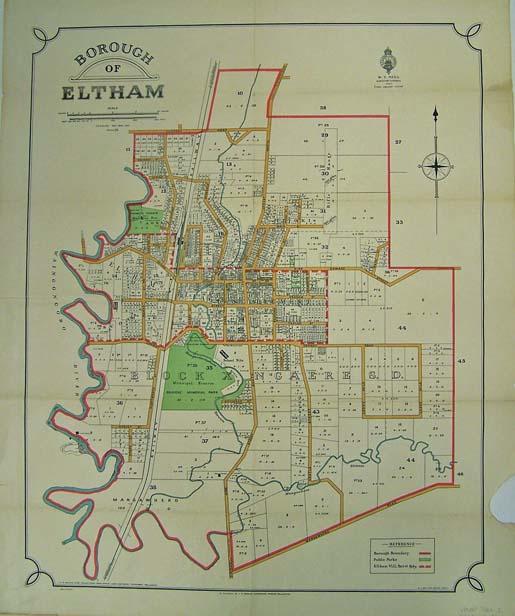
Moir Street is on the northern edge of Eltham. The land was owned by one of the town’s earliest settlers. However it wasn’t always an obvious area for a housing development.
The early growth of Eltham was restricted by large areas of surrounding swamplands, one to the east, and the Ngāere swamp to the north. The difficult land meant the earliest settlers preferred to establish themselves elsewhere. Fewer wanted to go to Eltham and its environs.
Not George Moir however. He had arrived in New Zealand in the mid-1800s. A blacksmith by trade, he lived in Whanganui, then Normanby, before buying land in Eltham in the early 1880s. On his first visit, he made a clearing in the bush and initially pitched a tent, later building a basic house and clearing more bush.
Once established, Moir opened a ‘smithy’ in the town and also started farming. Later he bought the Railway Hotel and managed it for a few years. But farming was his greatest interest and soon, partly because of activity elsewhere, the land he owned began to increase in value significantly, such that he could engage in yet another business venture.
That activity was in the 1890s, when large-scale attempts were made to drain the surrounding swamplands. With the town now much more accessible, it helped spur Eltham’s growth and of course increase the value of land. George Moir’s holdings included. Starting in the early 1900s, he was able to progressively sub-divide his land for roads and housing. Moir Street was declared a public road in 1905.
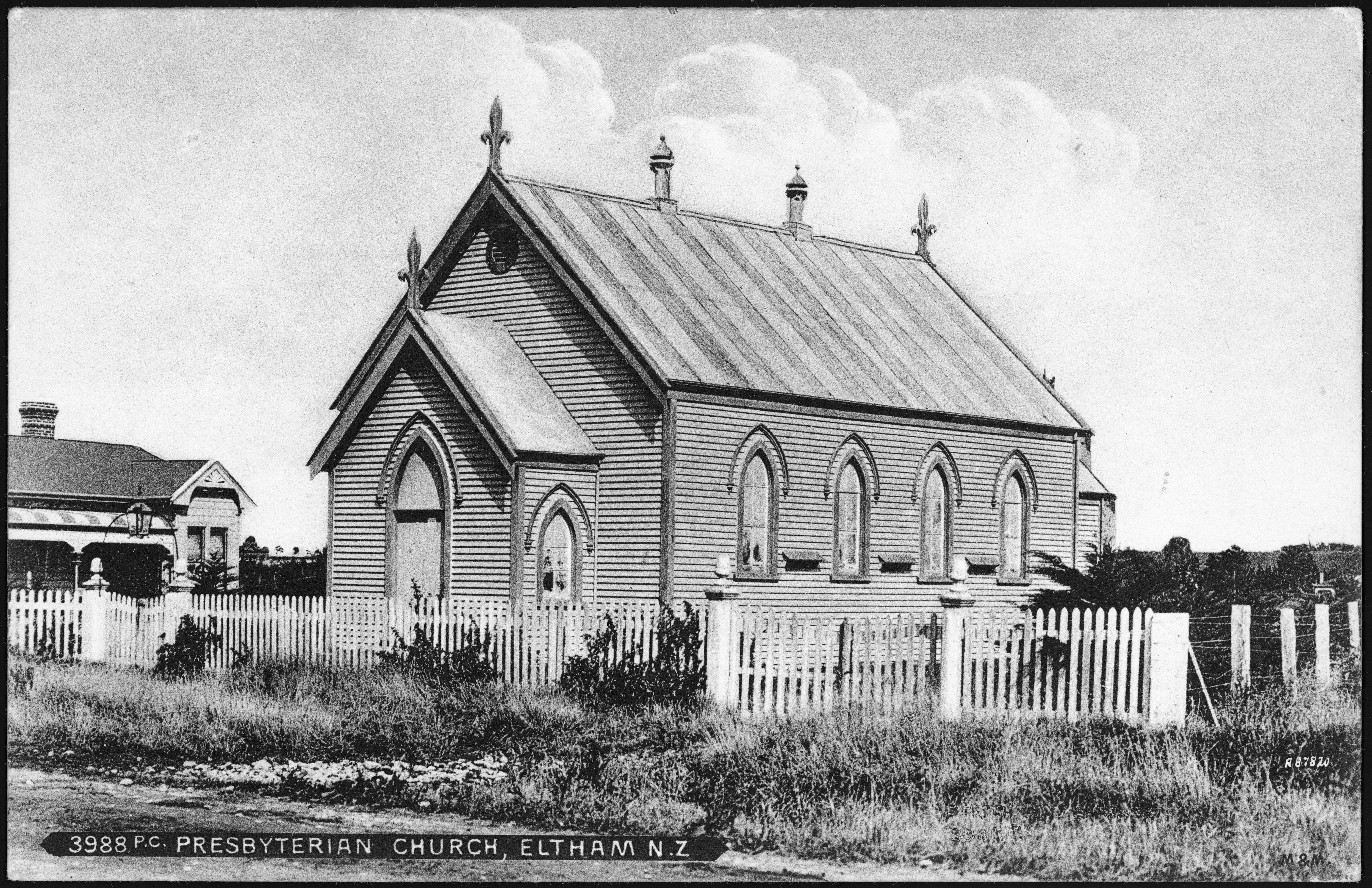
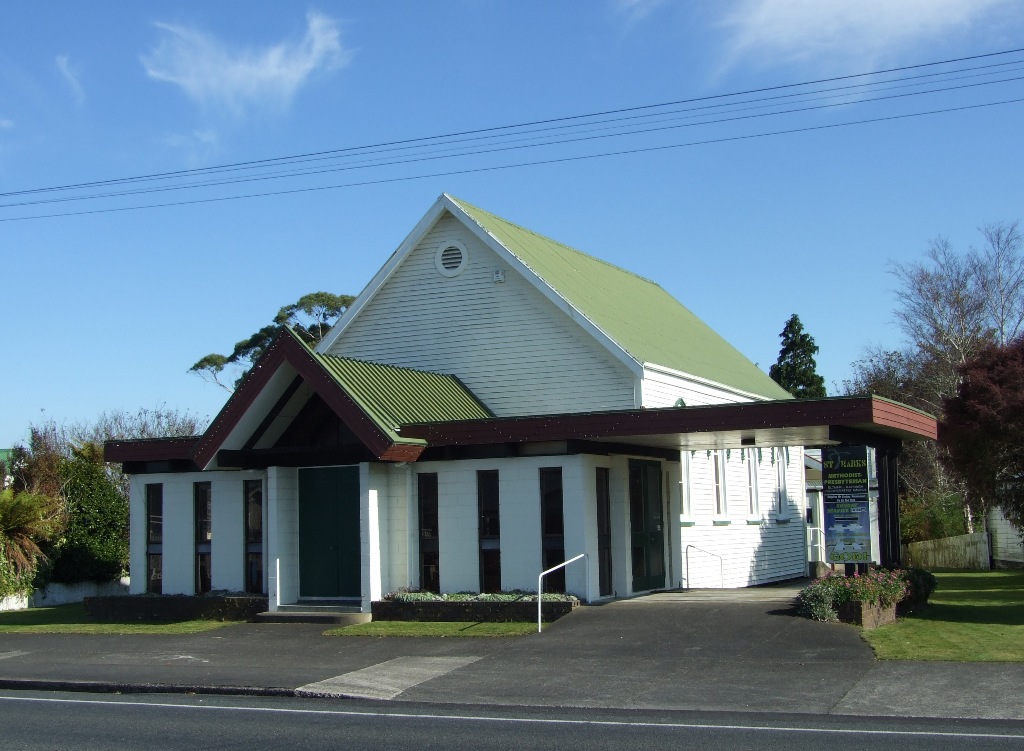
Moir was also generous to the community. In 1900 he donated the land that St. Mark’s Co-operating church on High Street now stands.
Still very active in business into his mid-70s, George Moir died aged 78 in 1913.
This story was originally published in the Taranaki Daily News.
Please do not reproduce these images without permission from Puke Ariki.
Contact us for more information or you can order images online here.
The information on this website is provided for general research and reference only. While we try to keep content accurate and current, we make no guarantees about its completeness or correctness. It should not be considered a replacement for a LIM or a Property Report. Some content is supplied by third parties. Puke Ariki has not verified this content and users should check its accuracy before relying on it.The inclusion of a building on the website does not imply heritage status. See SCHED1 in the NPDC District Plan for a list of buildings that have rules about what can happen to or around them (administered by NPDC). See the New Zealand Heritage List for a list of buildings that are celebrated for their heritage significance but are not subject to rules (administered by Heritage New Zealand Pouhere Taonga). Should any corrections need to be made to the records or for more information please contact us.


