

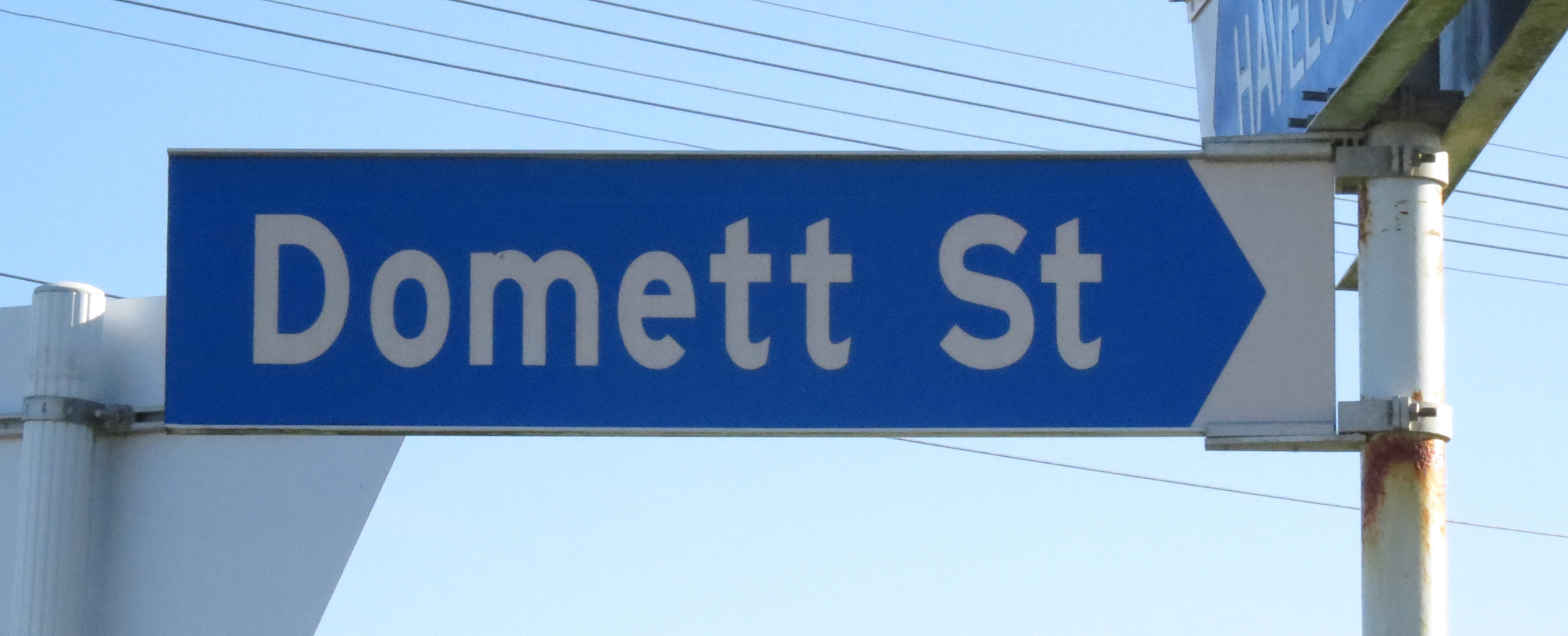
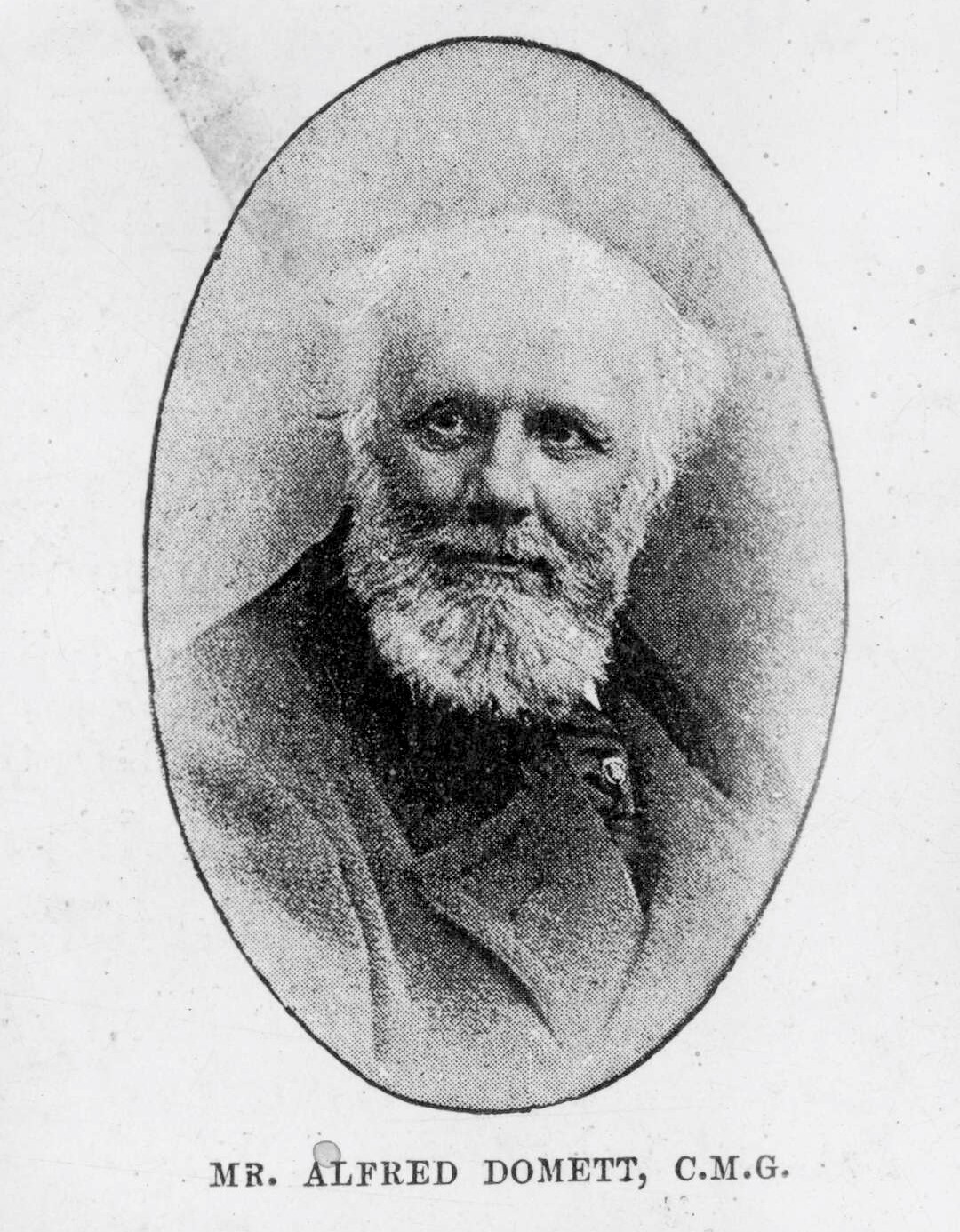
Named after the fourth Prime Minister of New Zealand, Dommett Street stretches between Longfellow Road and Layard Street in Ōpunake.
Alfred Dommett was born in Surrey on 20 May 1811, the fourth son of a wealthy ship owner, and trained to be a lawyer in London. He was also a great lover of poetry, writing and publishing many verses over the decades including a piece titled Ranolf and Amohia: a South Sea dream (1872) which ran to more than 100,000 words.
Alfred immigrated to New Zealand in 1842 and worked as editor of the Nelson Examiner. Entering politics in 1846, he was made Colonial Secretary for the province of New Munster (which consisted of the South Island, Stewart Island and part of the North Island up to the mouth of the Pātea River) in 1848. He served as Premier (Prime Minister) from 6 August 1862 to 30 October 1863 and his hardline views on the issue of land profoundly impacted Taranaki.
Alfred was opposed to Governor George Grey’s efforts to redress the injustice of the Waitara Purchase in 1860 and recommended that all lands belonging to Taranaki iwi should be taken for the purposes of Pākehā settlement – even those belonging to kūpapa or ‘friendly’ Māori. He estimated that £2 million could be raised from the sale of such land, although an increased military presence would be necessary, he noted in his diary, to rid Māori of their “towering notions of savage independence” and “passion for lawless self-indulgence”.
Plans for military occupation and punitive land seizure were controversial even at the time, with The Spectator in London pointing out that there was “something Roman in the project”. They led to the fall of Dommett’s government but he was subsequently made Registrar-General of Lands, which enabled him to administer more than one million acres of confiscated Taranaki whenua anyway. These confiscations were in clear breach of the Treaty of Waitangi and, while iwi have recently reached settlements in relation to those breaches, the great majority of land remains in private ownership more than 150 years later.
Dommett’s other achievements have been overshadowed by his racist politics but during his time in office he established the General Assembly (now Parliamentary) Library and laid the foundations for what became the National Library. He also initiated the process that led to the capital city being moved from Auckland to Wellington.
A passionate supporter of free, secular education for New Zealand children, Dommett married widowed teacher Mary George in 1856, adopting her two sons from her first marriage. The family returned to England in 1871, where Alfred was made a Companion of the Most Distinguished Order of St Michael and St George (CMG) in 1880. He died in London on 2 November 1887 aged 76.
Seaview Private Hospital opened on Dommett Street in 1920. Run by Doctor Thomas Newlands Watt and Matron M. Greig, it closed in 1922 when the Cottage Hospital (now a rest home) was opened on Layard Street and Watt was appointed medical officer there.
There is also a Dommett Street in Waitara, named after the same statesman.
This story was originally published in the Taranaki Daily News.
Please do not reproduce these images without permission from Puke Ariki.
Contact us for more information or you can order images online here.


