


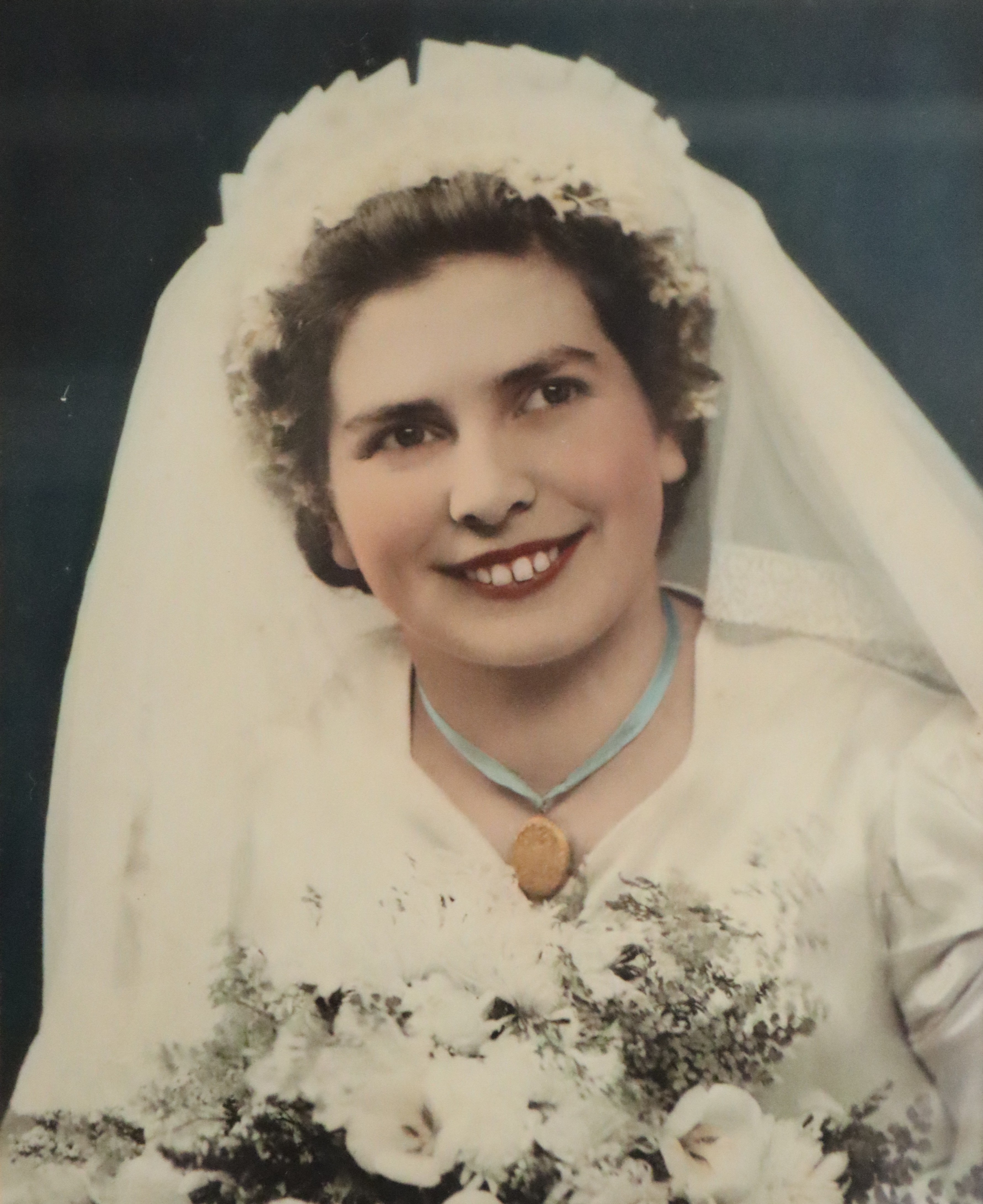
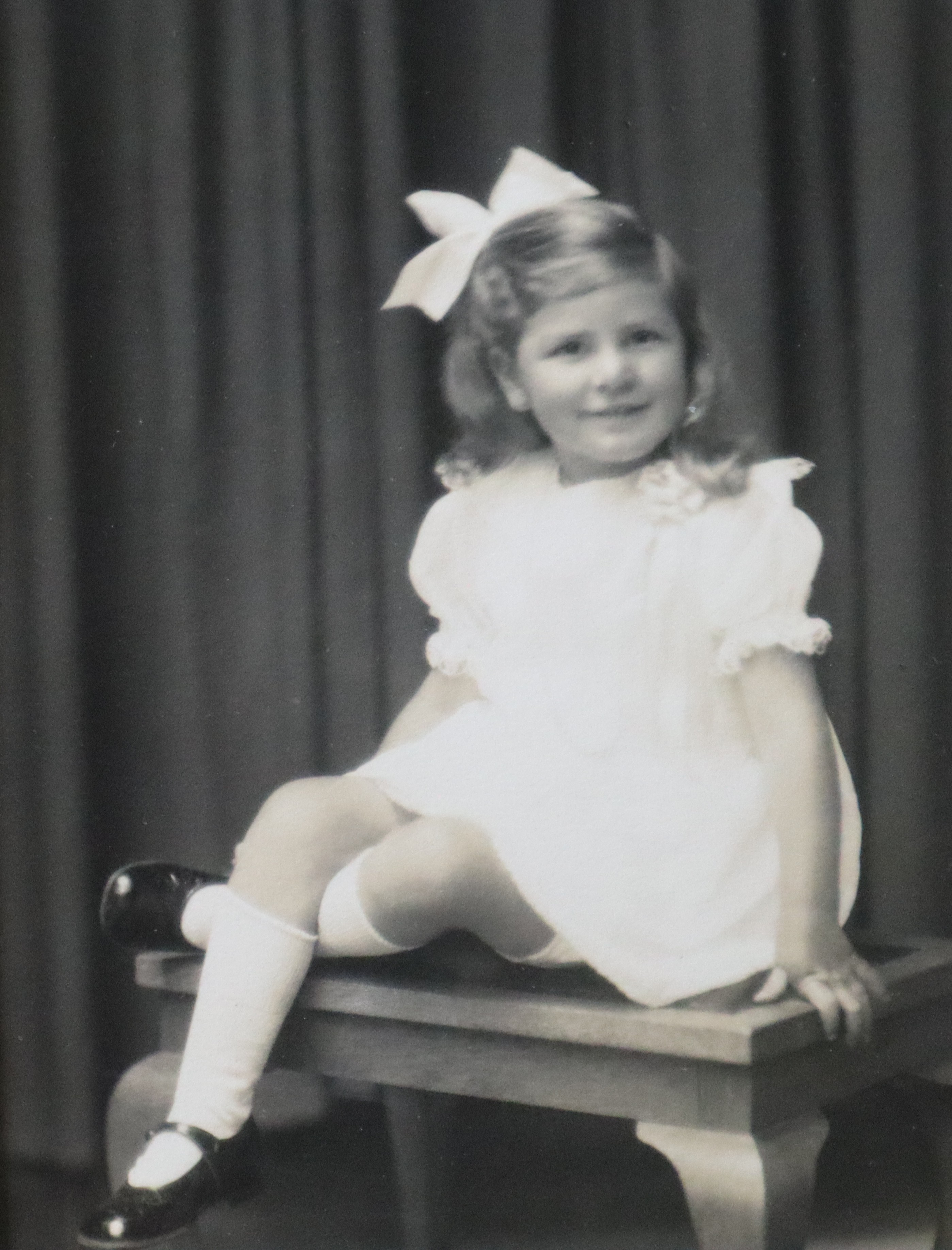
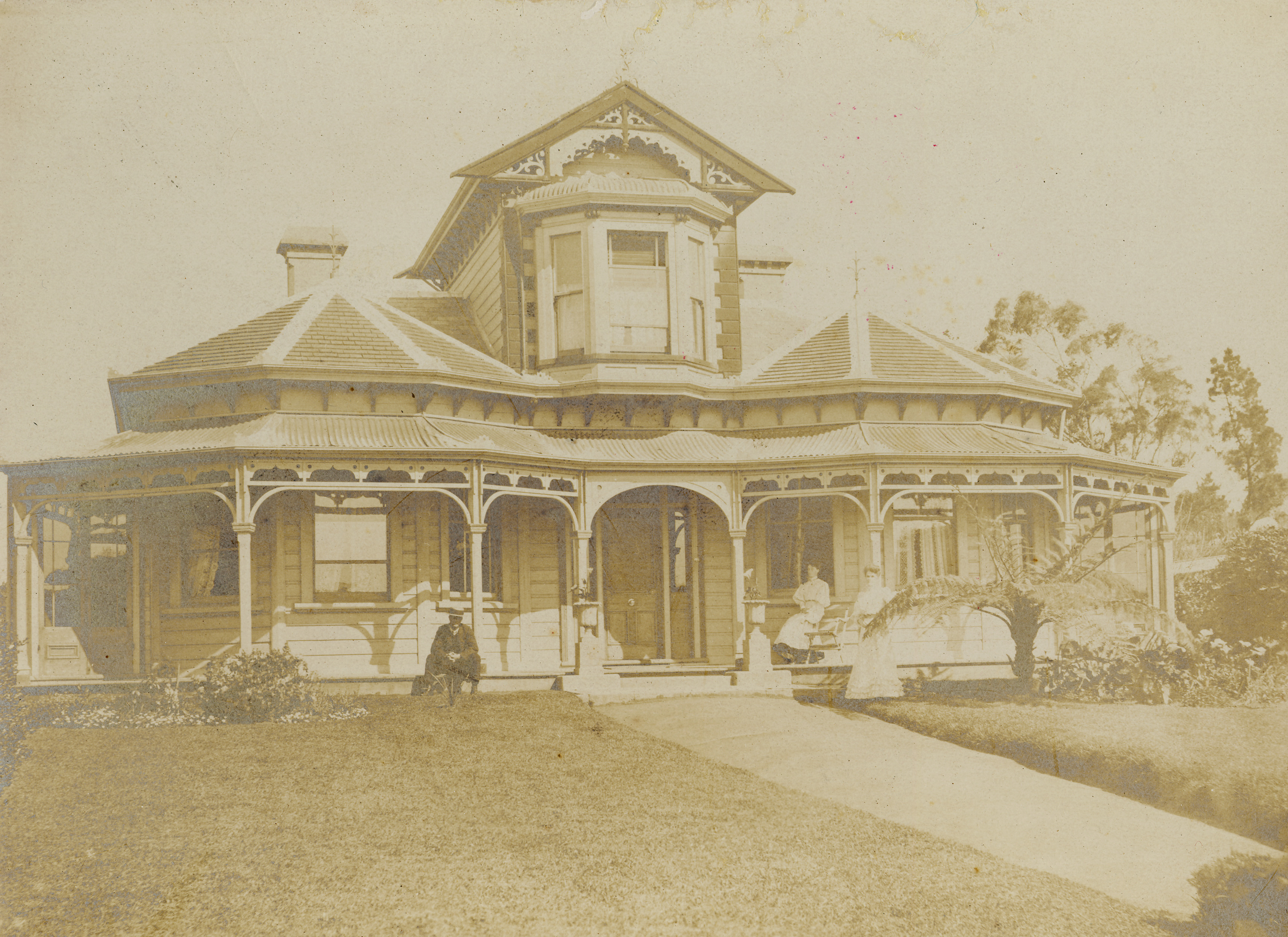
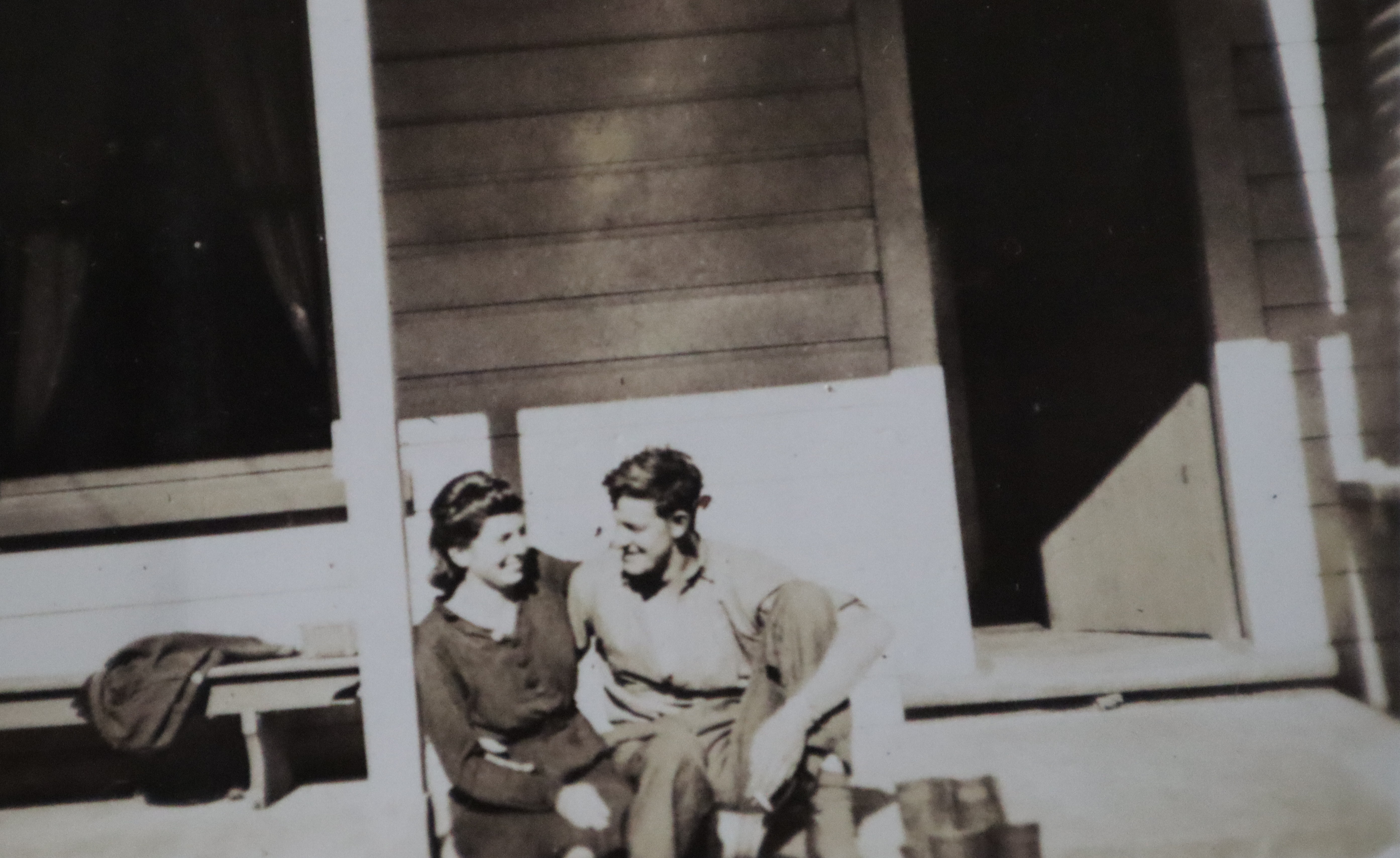
Mary Ella Wicksteed married Colin Roy Whiting in 1948. In 1994, on their 46th anniversary, Mary was interviewed by the museum as part of a weddings project and reminisced about their courtship, engagement, wedding and honeymoon.
Mary and Colin were one of 17,192 couples who got married in New Zealand that year. Seven hundred and four of whom tied the knot in Taranaki.
Mary was born on 4 February 1928 at Stratford Maternity Hospital. She was the only child of Shafto Harrison Wicksteed (1897-1969) and Dorothy Wicksteed (nee Greenwell) (1897-1962) who farmed in Cardiff, and the great-great-grand daughter of John Tylston Wicksteed.
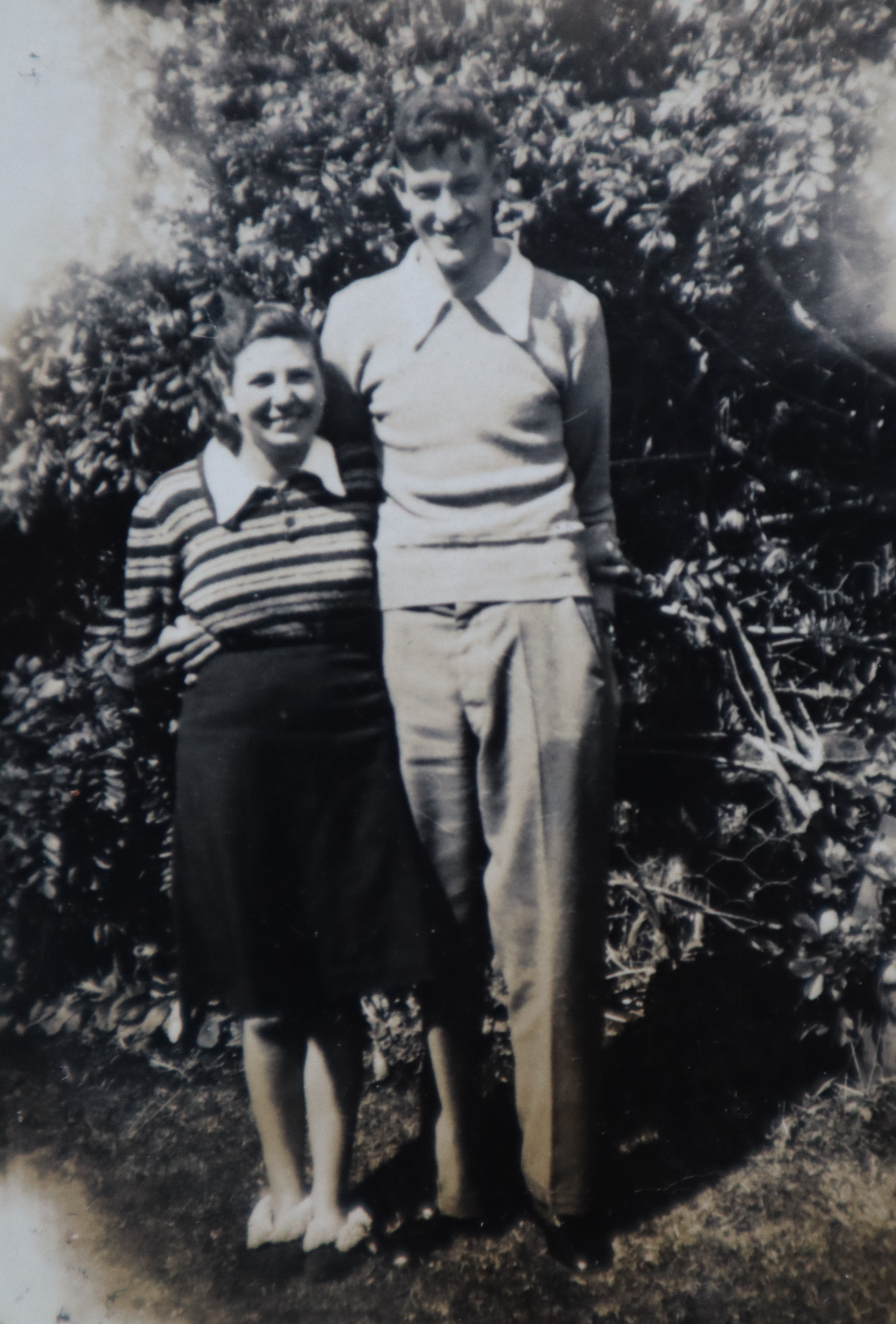
When she was 15 Mary got a job as a nurse aide at Noradene private hospital on Vivian Street in New Plymouth. She met Colin, a 19-year-old baker, while roller skating at Fitzroy:
It was in the winter so I suppose I was 16 and a half and I went skating and literally fell at his feet. And he picked me up and took me back to Noradene and he went home and told his mother he’d met the woman he was going to marry. If my son had done that I would have been so freaked out, I just couldn’t cope! I forewarned Peter: never, ever, ever do that to me. So that’s where I met him. And then I went on night duty and never saw him for a month and then I went back to skating and he sort of emerged and quite honestly I’d forgotten about him. Anyway, he was determined he was not going to lose me again – he’d been going to skating every Saturday night for a month!
The teenagers began dating, writing each other love letters which Mary kept in a suitcase for the rest of her life, and seeing each other whenever they could. This wasn’t always easy as Mary only got Tuesdays off and Colin worked long shifts – sometimes 24 hours – at the bakery. But they made time to go swimming at Ngāmotu Beach and have afternoon teas at the Palladium:
Another thing we did a lot [was] he would buy a packet of Raja salted peanuts and give them to me and we would go down to… Belt Road, go to the beach there and rock hop all the way to Fitzroy, to the Terminus, and get on the tram and come all the way back to South Road where he lived. I was a very good rock hopper in those days.
Mary then got a job as a maternity nurse in Stratford, living at the nurses’ home there, and after two years of going steady, Colin asked Mary’s mother for permission to propose. They got engaged a week after her 18th birthday in 1946:
[H]e never actually did the proposal thing, either on one knee or off it, he’d say things like “When we get married we’ll do such and such” or “We’ll buy this” or “We’ll do that” but he never actually said “Will you marry me?” ever… by the time we’d got that far into the relationship, yes, yes, I did [take it for granted].
They put an engagement notice in the Daily News but Mary said word had spread around Cardiff before the paper even went to print. She could recall getting her engagement ring like it was yesterday:
It was the most beautiful day – incredible! The sun shone, it was beautiful. We went to Stratford to Mr Butcher’s and he just told the jeweller how much money he had – there was none of this telling the jeweller beforehand and you choosing the ring in private – and he produced this tray of rings and the ring that Colin liked was two pound more than what he’d told me he could afford. And I kept trying to say “Oh no, no, have another”, you know, a plainer ring, and finally Mr Butcher got fed up and went and served somebody else and I hissed at him and said “We can’t afford it, look at the price!” and he said “I’ve got a bit more”. So then we got this lovely ring which had to be made smaller then we went and had a feed of oysters which to me was the crème de la crème – to have oysters was a real super special thing to do.
Mary didn’t have an engagement party but she did have a kitchen tea with friends who gave her things like a pudding basin and a grater, and she had a glory box which her mother had been helping her prepare even before she and Colin got engaged, filling it with tablecloths and other items essential for married life.
Mary wanted a small wedding, maybe 20 or 30 guests, with afternoon tea afterwards. She planned to treat herself to a new outfit for the day – including a handbag, court shoes and leather gloves, none of which she’d ever owned before – but certainly not a traditional white dress and veil. Her parents were relieved at the idea of not having to pay for a big party, as was the custom at the time, not least because her father Shafto had suffered from shellshock since serving on the Western Front in the First World War and stuttered when he got nervous so he dreaded the thought of giving a speech to a crowd.
But her maternal aunts had other plans. They insisted on a full white wedding with a sit-down meal in the local hall afterwards for 80 guests and poor Mary ended up feeling as though the celebration had been “hijacked”.
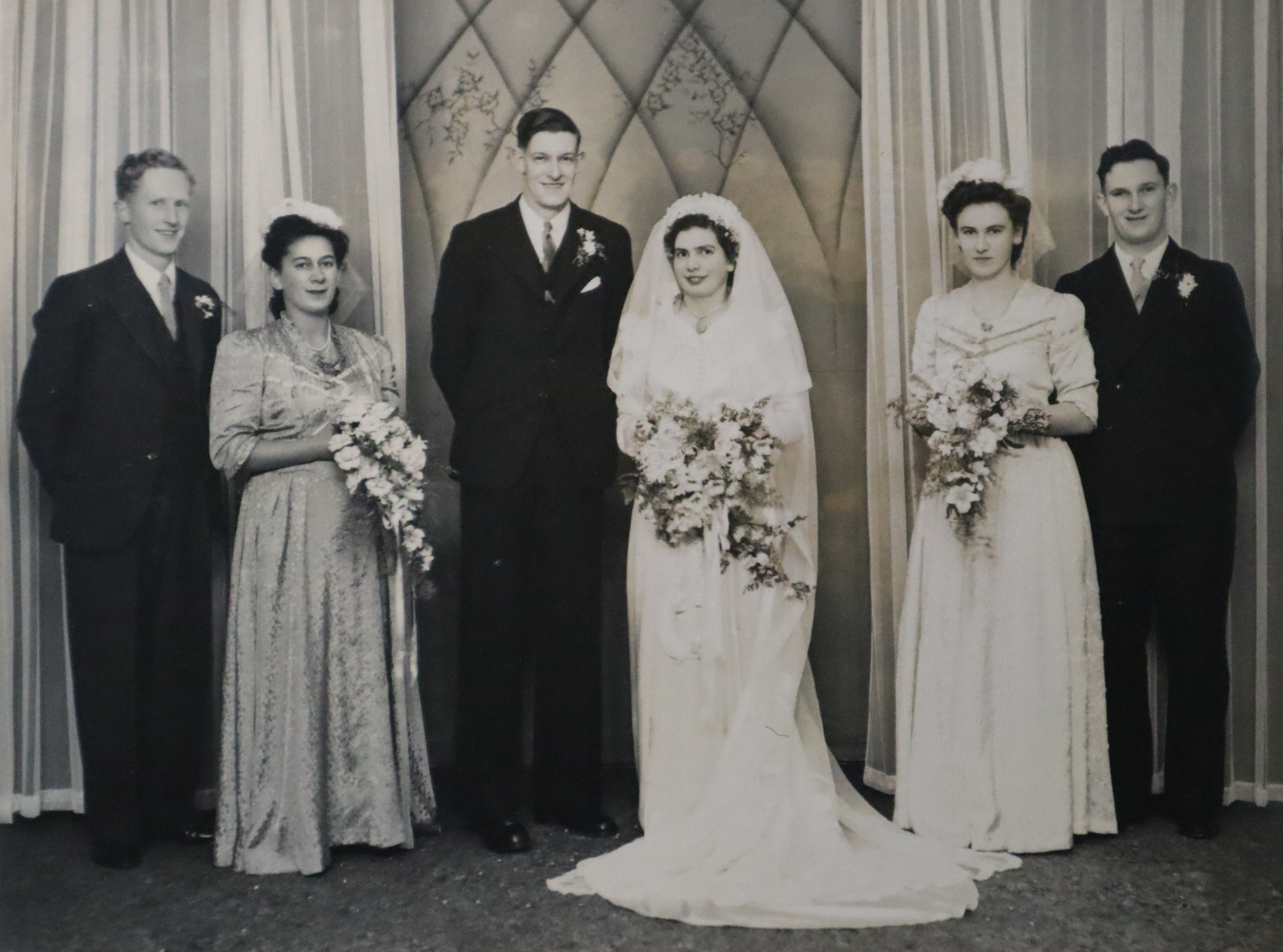
Mary had asked her best friend Wiki, another nurse, to be her bridesmaid but her aunts demanded that Mary’s cousin Beth be added to the bridal party – they even foisted another cousin onto Colin as his second groomsman.
Colin’s father was a printer so he made the invitations and Mary was able to get a secondhand dress and veil to save money, but the hall had to be hired and everything else paid for, meaning her parents were in debt for years afterwards.
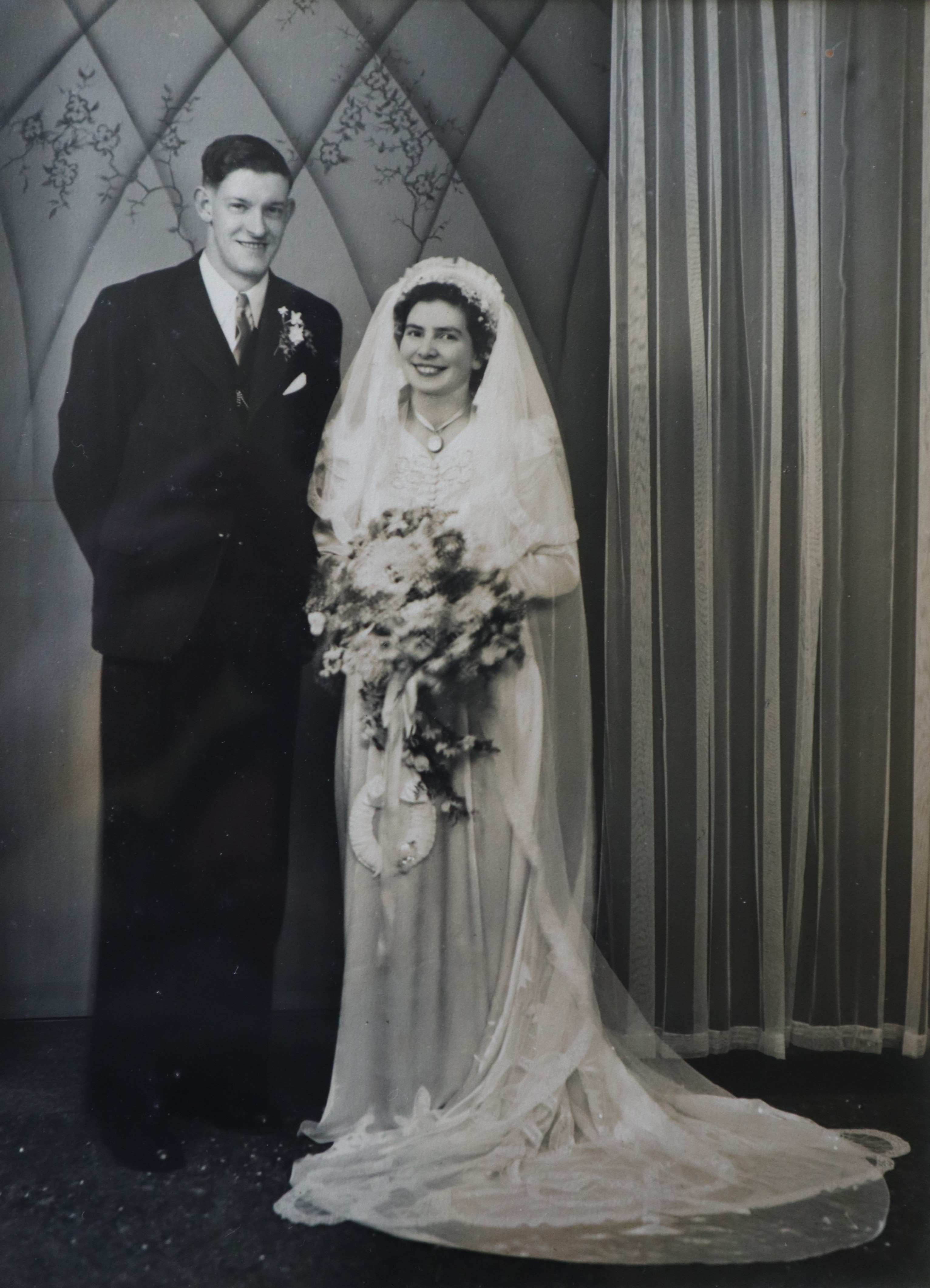
Mary’s father finally walked her up the aisle of the little church in Cardiff on Saturday 26 June 1948:
And when I walked in some of the neighbours – certainly nothing we’d planned – they had flowers on the altar and in little posies on all the pews! Now they had done that off their own bat, that was a kindness, something I wouldn’t have even thought to do.
It was a traditional service, the young pair promising “until death do you part” except the Methodist minister didn’t ask the bride to obey her new husband, only to cherish him, which Mary thought was “rather modern”. Colin put a wedding ring on Mary’s finger but didn’t wear one himself, which Mary said would have been “abnormal” for a man back then.
They were showered with confetti then it was off to the hall for the reception. Shafto got through his speech, but Mary said everybody else’s, not to mention all the telegrams and toasts, seemed to go on forever. She was already exhausted, having been up filling dozens of cream horns with her mother since 5am.
Colin’s boss at the bakery had made an elaborate three-tier wedding cake so pretty that Mary said they were sad to cut it:
The top tier was always traditionally left for the christening but we were rather long in having a christening and it went mouldy!
But you did put it away?
Yes, in a tin.
And which cake did you cut up at the reception?
The bottom one.
And did you cut up little pieces to be sent to people who couldn’t come?
Oh yes, in a tin box, yes, and in a little envelope.
The wedding party drove to Stratford to have formal pictures taken at a studio then to Colin’s parents’ house in New Plymouth where they changed into their travelling clothes and took a taxi to the White Hart – Mary’s first ever stay in a hotel.
Mr and Mrs Colin Whiting left for their honeymoon the next day, taking a bus to Auckland then on to Tinopai where Colin’s uncle had offered them his remote bach:
We walked and we talked and chipped off oysters which was sort of illegal, well, immoral probably, and ate our fish and really relaxed and unwound and talked and… well, that’s when the honeymoon began, when we were at Tinopai – it was a beautiful place.
The story of Mary’s wedding and everything that led up to it gives us a delightful glimpse of events so significant that they were still fresh in her mind five decades later, yet so commonplace that they were rarely discussed in such detail.
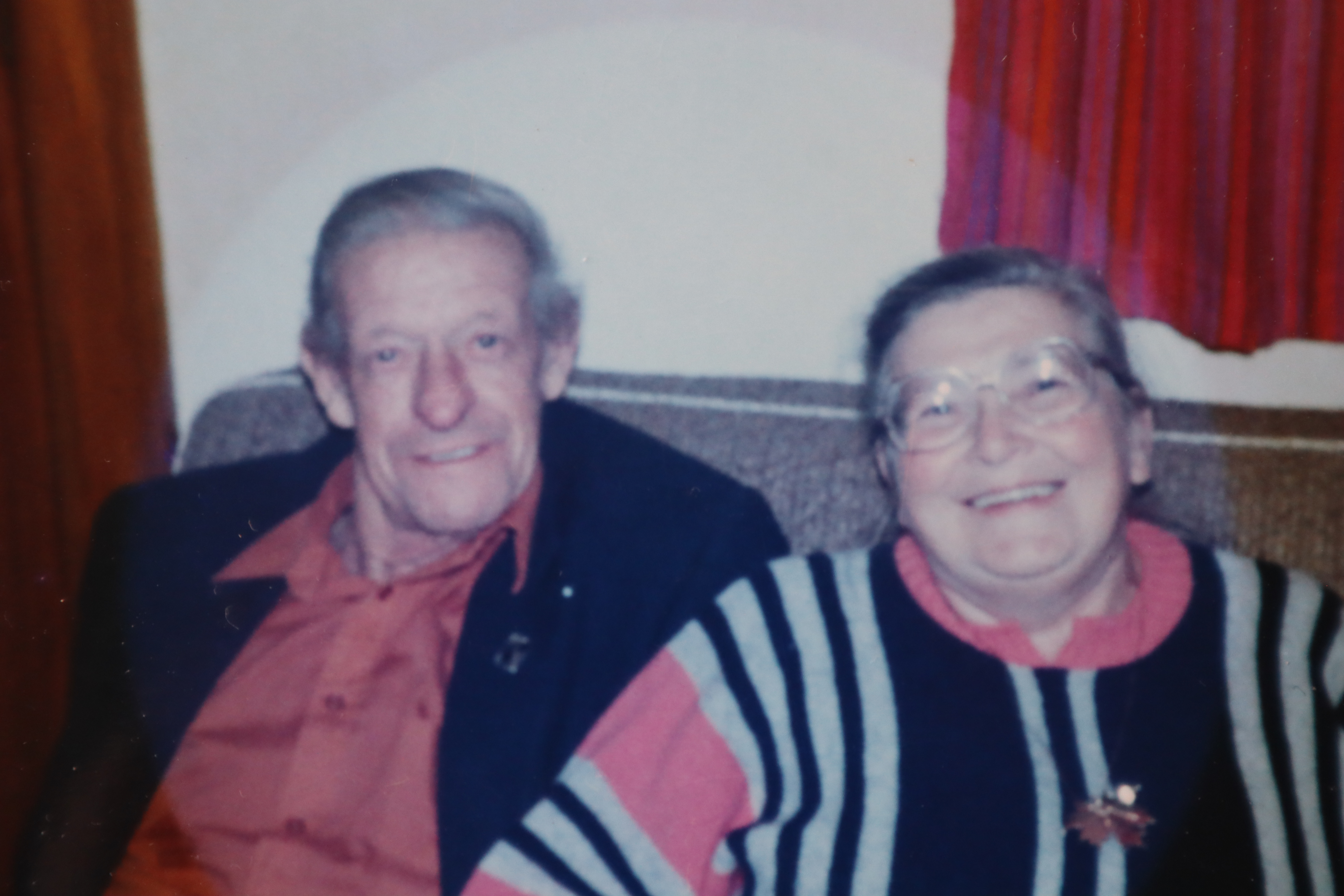
She and Colin remained devoted to each other for the next 43 years. He died in 1992, followed by Mary on 30 June 2012, and their headstone at Awanui Cemetery remembers them simply as best friends.
.
This story was originally presented as part of the In Her Own Words: More Taranaki Women’s Stories event during Taranaki Heritage Month on 16 October 2026.
Please do not reproduce these images without permission from Puke Ariki.
Contact us for more information or you can order images online here.
The information on this website is provided for general research and reference only. While we try to keep content accurate and current, we make no guarantees about its completeness or correctness. It should not be considered a replacement for a LIM or a Property Report. Some content is supplied by third parties. Puke Ariki has not verified this content and users should check its accuracy before relying on it.The inclusion of a building on the website does not imply heritage status. See SCHED1 in the NPDC District Plan for a list of buildings that have rules about what can happen to or around them (administered by NPDC). See the New Zealand Heritage List for a list of buildings that are celebrated for their heritage significance but are not subject to rules (administered by Heritage New Zealand Pouhere Taonga). Should any corrections need to be made to the records or for more information please contact us.


