


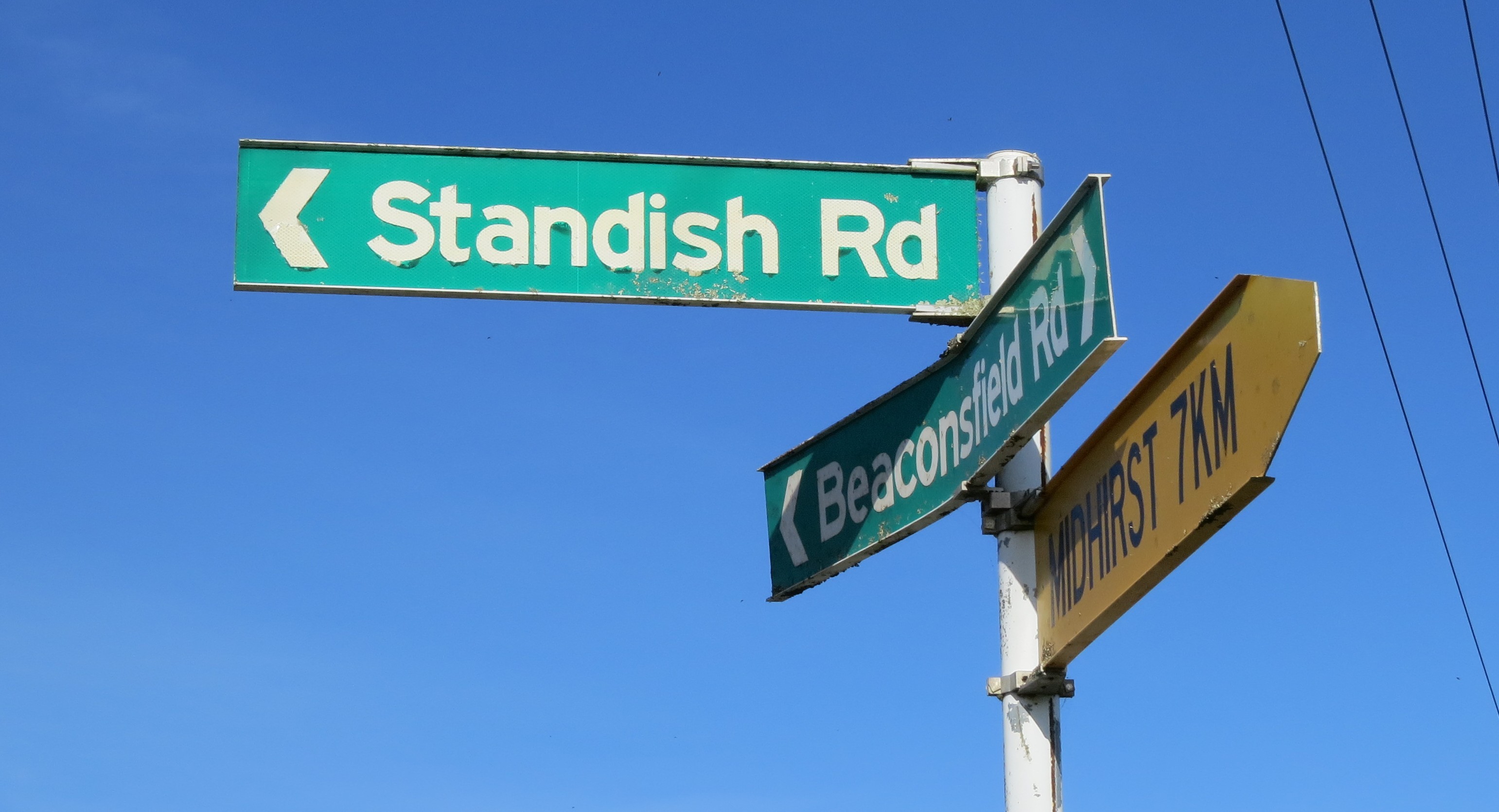
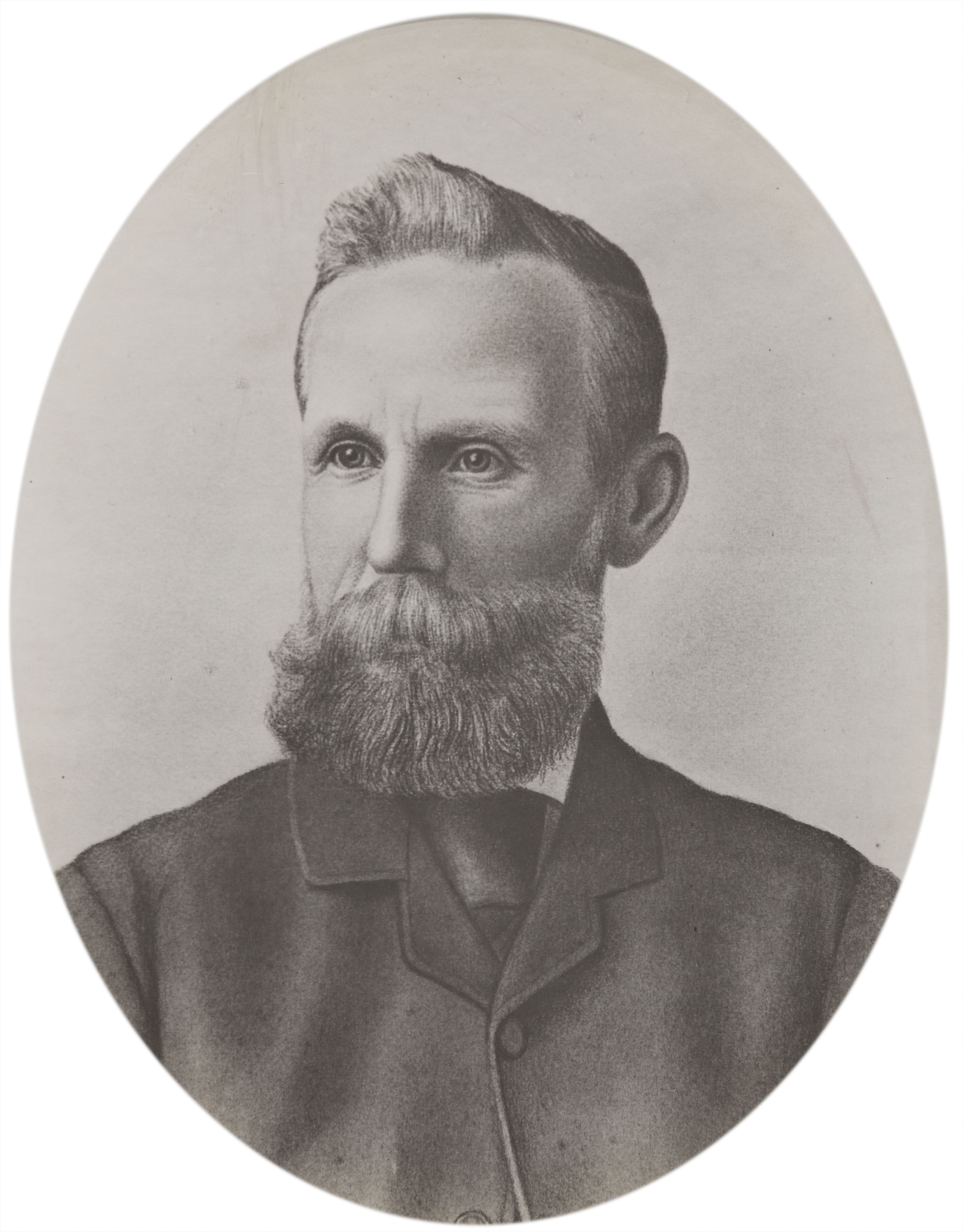
Standish Road runs between Beaconsfield and East Roads outside Stratford. It was named in honour of Arthur Standish, who was President of the Taranaki Agricultural Society amongst many other public service roles.
Born in Yorkshire on 21 March 1838, Arthur Standish immigrated to New Plymouth with his family in 1844. They lived near what is now Maratahu Street and Arthur followed his father Thomas into the legal profession, training in Auckland before joining the family firm.
Arthur loved the outdoors and was a keen rider who owned many racehorses. In February 1857 he and five friends – Jardine Crompton, William Greenwood, Wilson Hursthouse, Fred Murray and Stephenson Percy Smith – set out to climb Taranaki Maunga. The buddies left a small pyramid of stones “at a considerable elevation” to mark their triumphant ascent but later admitted they had been too tired to make it to the actual mountaintop.
It was during this trip that Arthur and his pals decided, with the confidence of youth, to attempt a journey to Lake Taupō. They left in January 1858, travelling on foot, horseback and by canoe via Mōkau through what was still largely unmapped territory. After marvelling at the Pink and White Terraces, they returned home two months later by way of Rangitikei and Whanganui, having traversed nearly 1000 kilometres.
Arthur married Frances Brown (1847-1929), daughter of local clergyman Henry Handley Brown, and they raised six children on a property dubbed Witiora, next to Arthur’s parents’ land in Westown.
Arthur’s career included stints as Crown Solicitor, President of the Taranaki Law Society and Jockey Club, Secretary for Land and Deputy Superintendent of the Province. He also sat on the Harbour and Education Boards and served as first Mayor of New Plymouth. Arthur was instrumental in ensuring that the mountain he had (almost) climbed as a lad and its slopes were protected as a forest reserve in 1881, leading eventually to the creation of Egmont National Park, now Te Papa-Kura-o-Taranaki.
That same year, Arthur’s legal expertise took him to Parihaka where he was involved in the prosecution of Te Whiti-o-Rongomai and Tohu Kākahi. On behalf of the Crown, Standish charged the two men with “inciting numbers of Her Majesty’s subjects to insurrection” and their trials ended with them being imprisoned in the South Island.
Arthur Standish died in New Plymouth on 24 June 1915 and was remembered in the Taranaki Daily News as “a good sportsman, a genial companion and a thorough gentleman”.
The area east of Stratford was surveyed by Henry Lufkin Skeet (1835-1882) in the 1870s, with roads laid out in the 1880s. The first mention of Standish Road appears in the Taranaki Herald in November 1886 when the local road board allocated money for earthworks and the draining of nearby swampland. Flooding, especially in winter, remained an issue with the thoroughfare all but impassable in bad weather despite the practice of laying logs across its muddy width known as “corduroying”. The road finally began to be metalled in 1916, using 500 cubic yards of crushed boulders, and part of it was eventually raised by ten feet to prevent further erosion of the surface during heavy rains.
This story was originally published in the Taranaki Daily News.
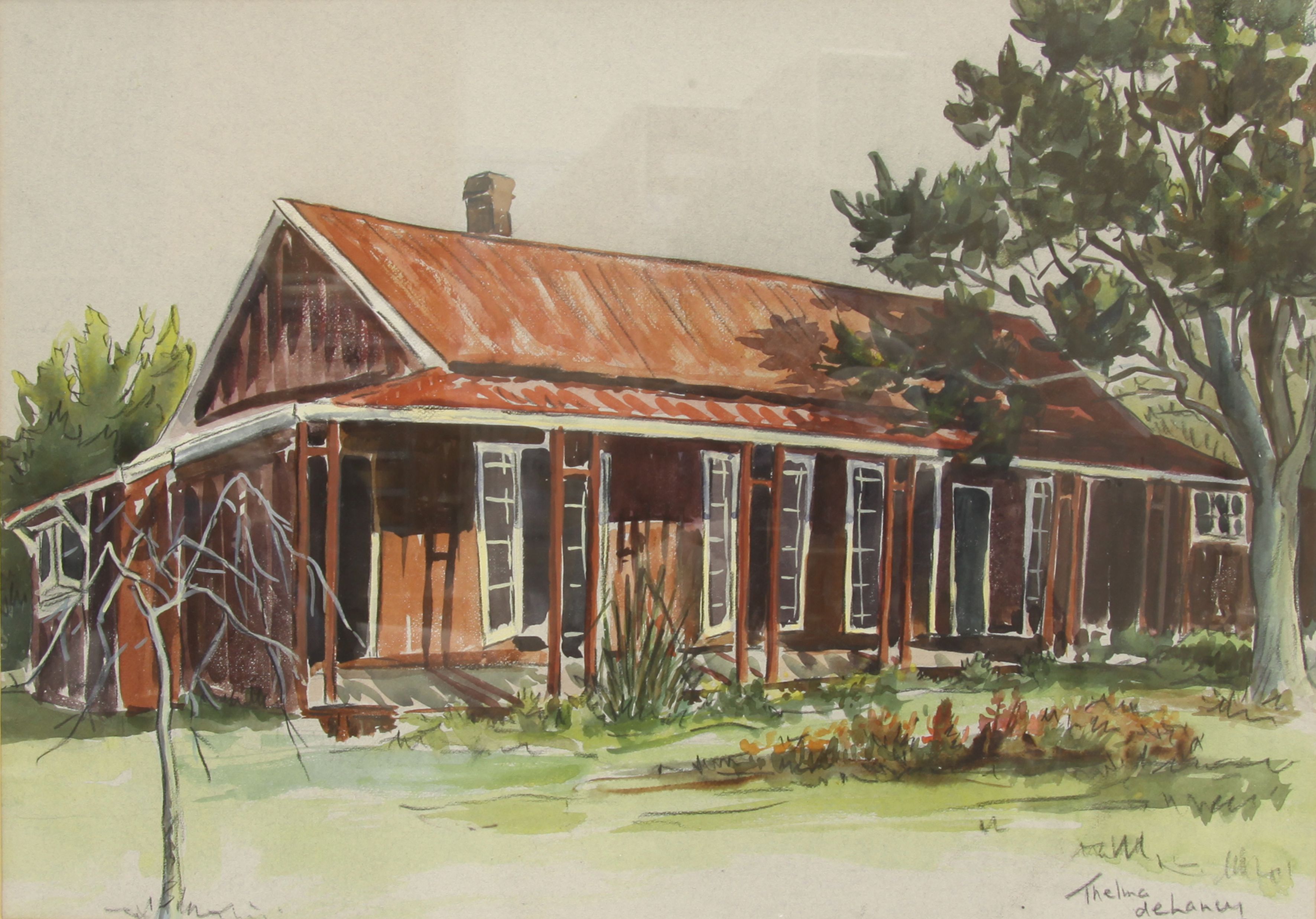
'Witiora', Standish Residence, Wallace Place (1878-79 - demolished 1978)
LinkPlease do not reproduce these images without permission from Puke Ariki.
Contact us for more information or you can order images online here.
The information on this website is provided for general research and reference only. While we try to keep content accurate and current, we make no guarantees about its completeness or correctness. It should not be considered a replacement for a LIM or a Property Report. Some content is supplied by third parties. Puke Ariki has not verified this content and users should check its accuracy before relying on it.The inclusion of a building on the website does not imply heritage status. See SCHED1 in the NPDC District Plan for a list of buildings that have rules about what can happen to or around them (administered by NPDC). See the New Zealand Heritage List for a list of buildings that are celebrated for their heritage significance but are not subject to rules (administered by Heritage New Zealand Pouhere Taonga). Should any corrections need to be made to the records or for more information please contact us.


