


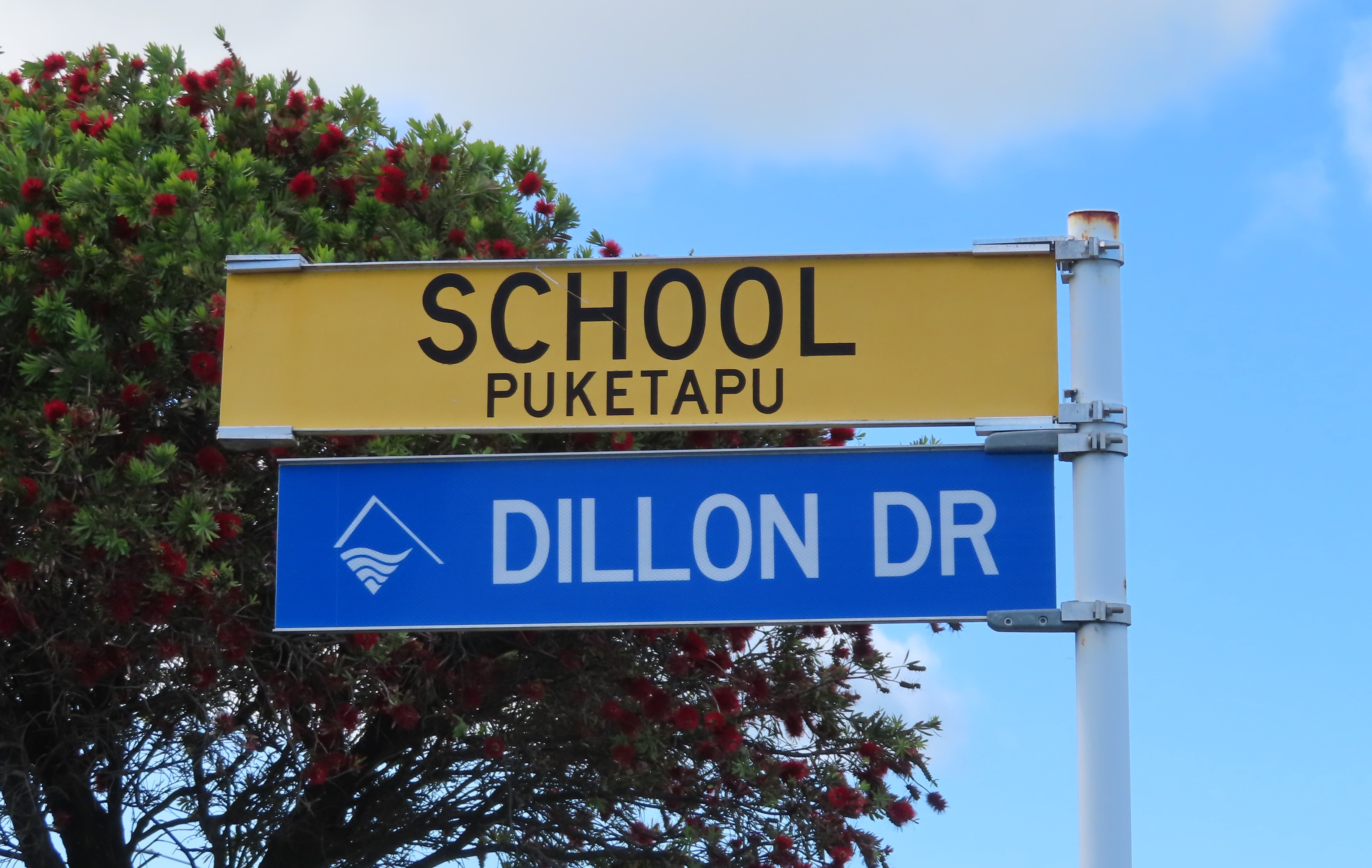
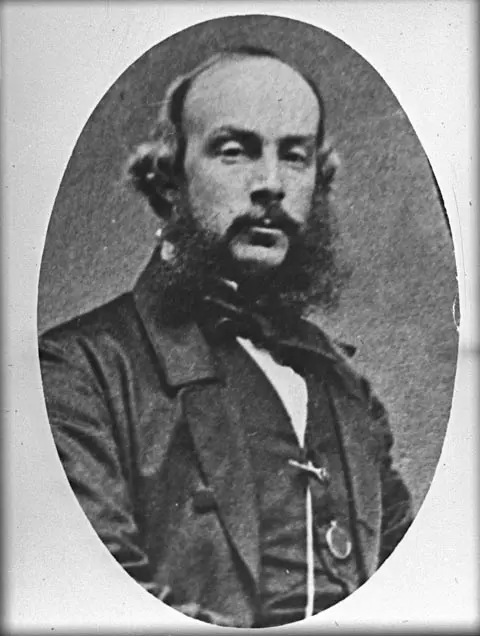
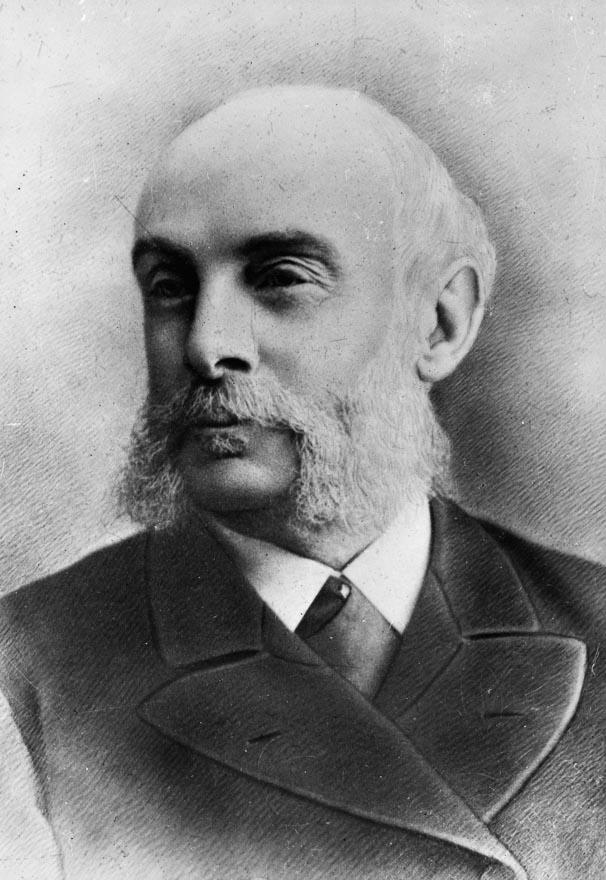
Dillon Drive runs between Mangati Road and Glasgow Street in Bell Block. It commemorates Francis Dillon Bell, a politician and public administrator who also gave his name to the suburb itself.
Bell was born in France on 8 October 1822, the son of the British merchant. Always called Dillon by his family and friends, he grew up speaking French as well as German, Latin and Greek and was taught painting and music by private tutors. When the family fell on hard times, his father’s cousin Edward Gibbon Wakefield found the teenager a job in the London office of the New Zealand Company. Fascinated by the distant colony, Dillon published several articles about Aotearoa before travelling here himself in 1843. Working as the Company’s resident agent, first in Nelson, then Auckland and Wairarapa, he arrived in New Plymouth on the ship Catherine Johnson on 31 August 1847.
Courteous, sociable and witty, Dillon was popular with both settlers and local Māori. He picked up te reo quickly which helped him negotiate the acquisition of a large amount of land, including the purchase of 1500 acres [607 hectares] near Mangati Stream from Puketapu hapū which came to be known as the Bell Block. Such deals proved controversial, but Dillon still found time between Company work and his role as Justice of the Peace to explore the region, “discovering” Bell’s Falls (along with a species of mountain daisy) during an ascent of Taranaki Maunga in February 1848 and painting the landscape. Puke Ariki holds one of his watercolours, a panoramic view of Ngāmotu from Mount Bryan Domain (now colloquially known as Pig Out Point).
Dillon left New Plymouth in July 1848 and entered national politics in 1851, when he was appointed Commissioner of Crown Lands in Wellington. He became Colonial Treasurer (forerunner to the Minister of Finance) in 1856 and again in 1862, as well as Minister of Native Affairs, then Speaker of the House in 1871.
Knighted in 1873, Dillon served as New Zealand’s Agent-General (high commissioner) in London between 1880 and 1891 and was awarded the Legion of Honour by the French Government for his role in helping to organise the 1889 Exposition Universelle or World's Fair in Paris.
Dillon made the most of his time as a bachelor, engaging in love affairs with both Māori and Pākehā women, but settled down when he married Margaret Joachim Hort in 1849. As his bride was Jewish, they were not allowed to wed in an Anglican church and had to have a civil ceremony instead. The couple went on to have seven children including eldest son Francis Henry Dillon, who became our first New Zealand-born Prime Minister in 1925.
Dillon acknowledged that the New Zealand Company “experiment” had its flaws but always believed that “A colony is truly the place for a poor man: and comparing a labourer's previous life in England with that...in a new settlement, he has incomparably the best of it."
Francis Dillon Bell died in Otago on 15 July 1898 at the age of 75 and was remembered for his “dominating sense of duty to the public interests of his country”.
This story was originally published in the Taranaki Daily News.
Please do not reproduce these images without permission from Puke Ariki.
Contact us for more information or you can order images online here.
The information on this website is provided for general research and reference only. While we try to keep content accurate and current, we make no guarantees about its completeness or correctness. It should not be considered a replacement for a LIM or a Property Report. Some content is supplied by third parties. Puke Ariki has not verified this content and users should check its accuracy before relying on it.The inclusion of a building on the website does not imply heritage status. See SCHED1 in the NPDC District Plan for a list of buildings that have rules about what can happen to or around them (administered by NPDC). See the New Zealand Heritage List for a list of buildings that are celebrated for their heritage significance but are not subject to rules (administered by Heritage New Zealand Pouhere Taonga). Should any corrections need to be made to the records or for more information please contact us.


