
Clerke Place in Marfell was named in 1959 after an explorer who sailed with Captain James Cook. When the block, previously owned by the Marfell family, was subdivided historian Herbert Mullon suggested to the city council that streets in the new suburb be named in honour of Cook and his famous voyages of discovery – hence Adventure Street and Botany Place amongst others.
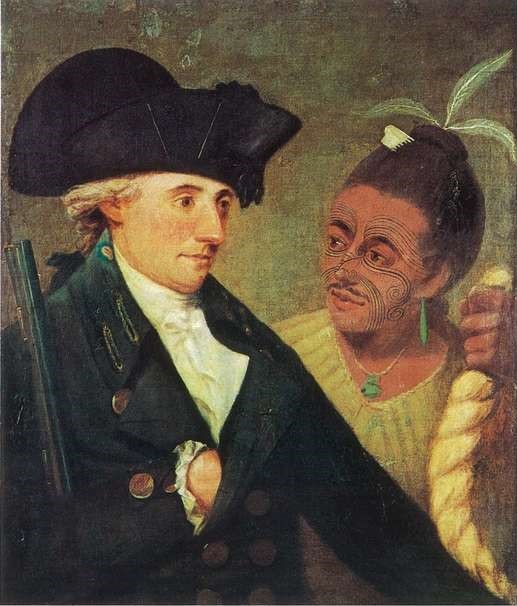
Charles Clerke was born in Essex on 22 August 1841, son of a Justice of the Peace, and joined the Royal Navy as a teenager. He took part in the Seven Years’ War but this did not deter him from life on the waves – he later wrote that he would “go to Sea in a Grog Tub” if need be. After joining John Byron's circumnavigation of the globe between 1764 and 1766, Clerke published a humorous account of the trip describing eight-foot-tall giants in Patagonia.
The high-spirited Clerke then came under the command of James Cook. He was master's mate on the ship Endeavour during Cook’s first Pacific voyage (1768-1771), promoted to second lieutenant on the second voyage (1772-1775) and finally given his own vessel, Discovery, on the third (1776-1780).
Clerke took over the sloop Resolution after Cook’s murder in Hawaii in February 1779. He and his crew continued searching for a navigable route between the Atlantic and Pacific oceans through the Arctic Circle but Clerke died of tuberculosis on 22 August 1779 – his 38th birthday – before the fabled Northwest Passage could be found. He had contracted the disease several years before while in debtor’s prison, after acting as guarantor for the gambling debts of one of his brothers.
Clerke perished at sea as the Resolution sailed from the Bering Strait to Kamchatka Peninsula. After burying their captain on shore in frozen earth with the help of a local Orthodox priest, the remaining crew took a year to return to England via China and Cape Town.
A small obelisk was eventually erected to commemorate Clerke by the British in 1913, in what is now the Russian city of Petropavlovsk-Kamchatsky. The inscription declares it to be “Sacred to the memory of Captain Charles Clerke… whose body is interred beneath this stone.”
This story was originally published in the Taranaki Daily News.
Related Documents
Taranaki DP3030 Clerke Place (1912) - ICS Pre 300,000 Cadastral Plan Index imaged by LINZ.
Taranaki DP9062 Clerke Place (1961) - ICS Pre 300,000 Cadastral Plan Index imaged by LINZ.
Please do not reproduce these images without permission from Puke Ariki.
Contact us for more information or you can order images online here.


