


“It cannot be questioned that the training and education of women and the right utilisation of their powers and influence are matters of supreme importance to the State and the race”.
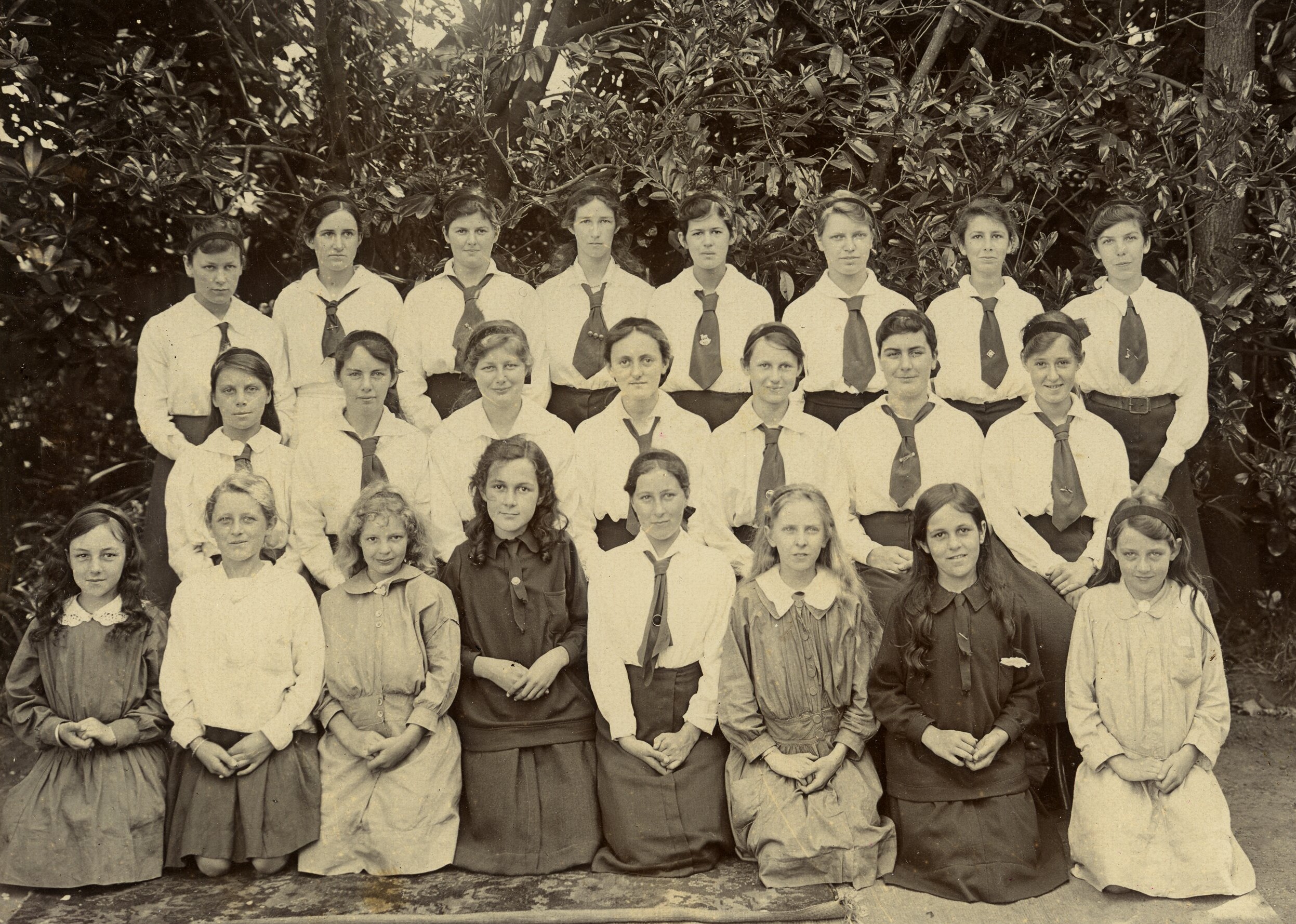
So the Hawera & Normanby Star newspaper proclaimed in 1913, the year that May Tayler was sent to fashionable Chetwode girls’ school in New Plymouth.
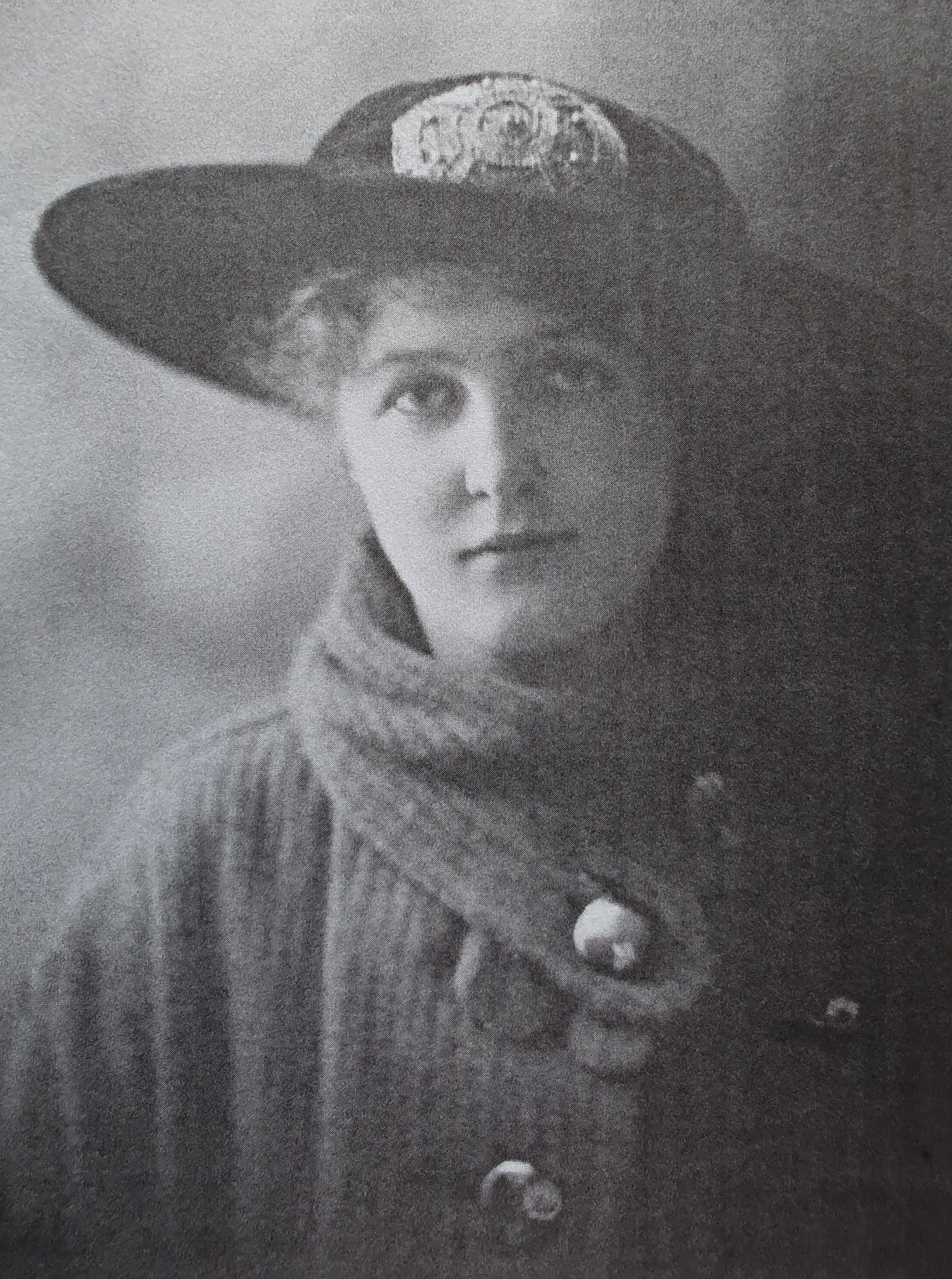
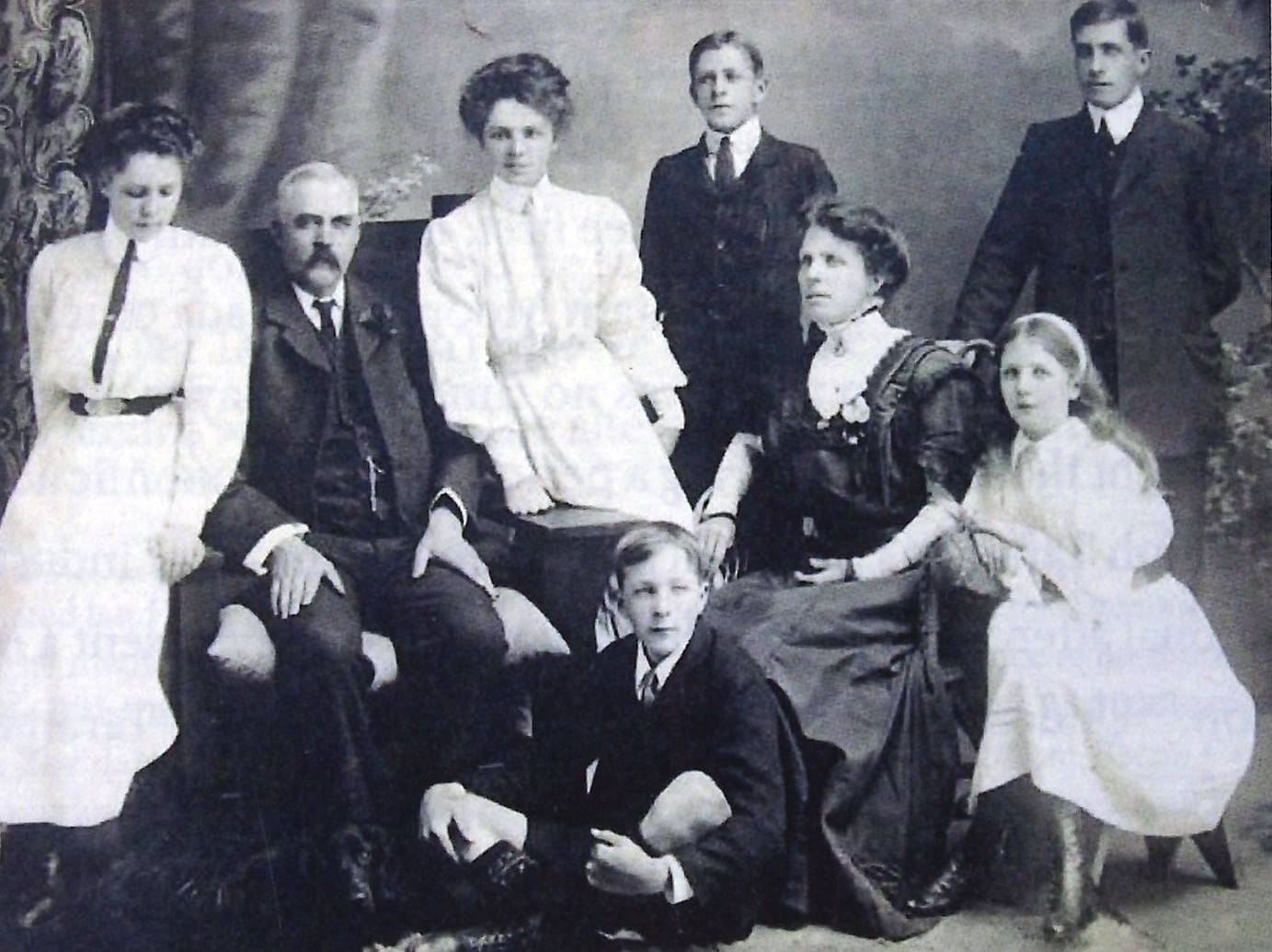
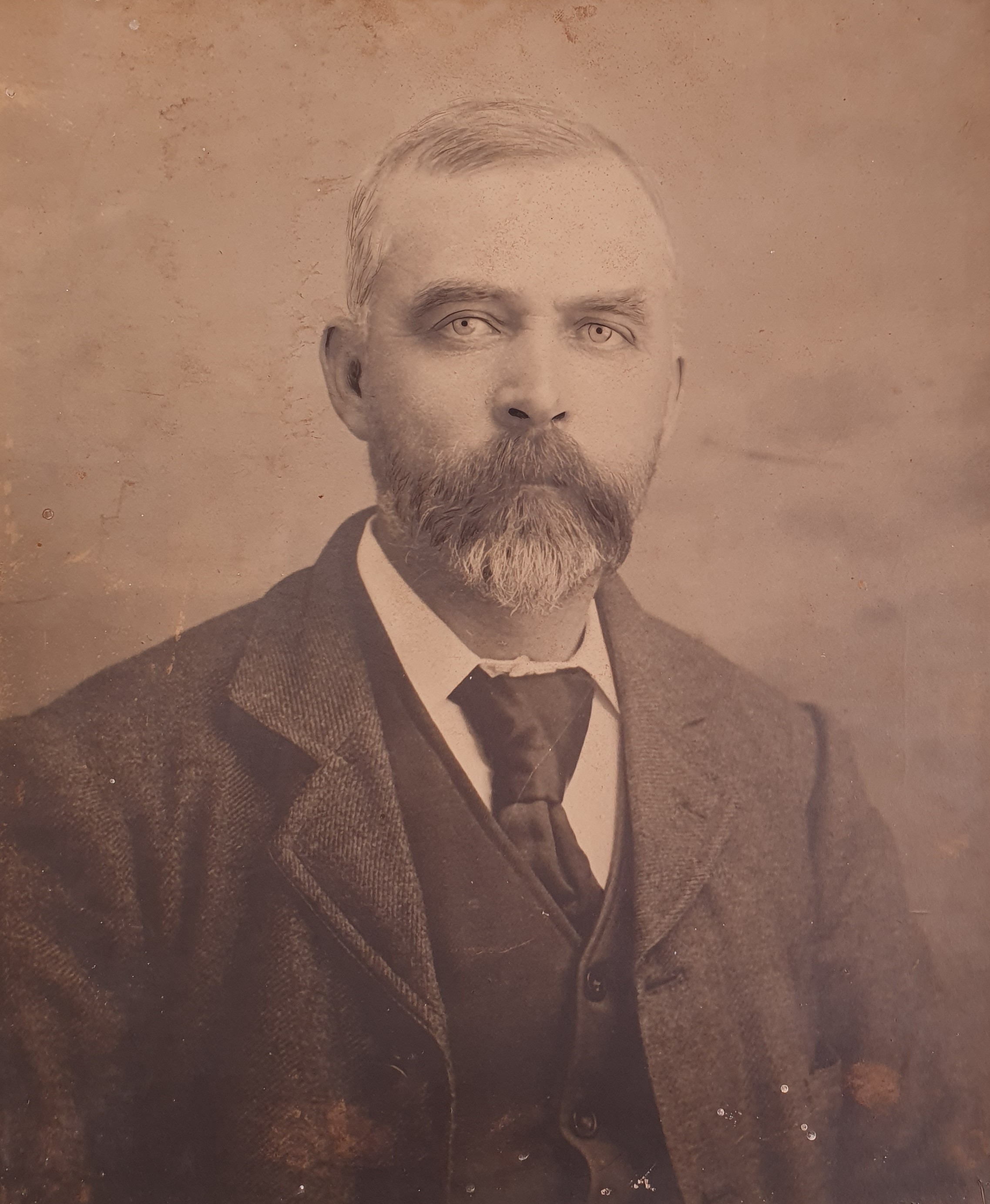
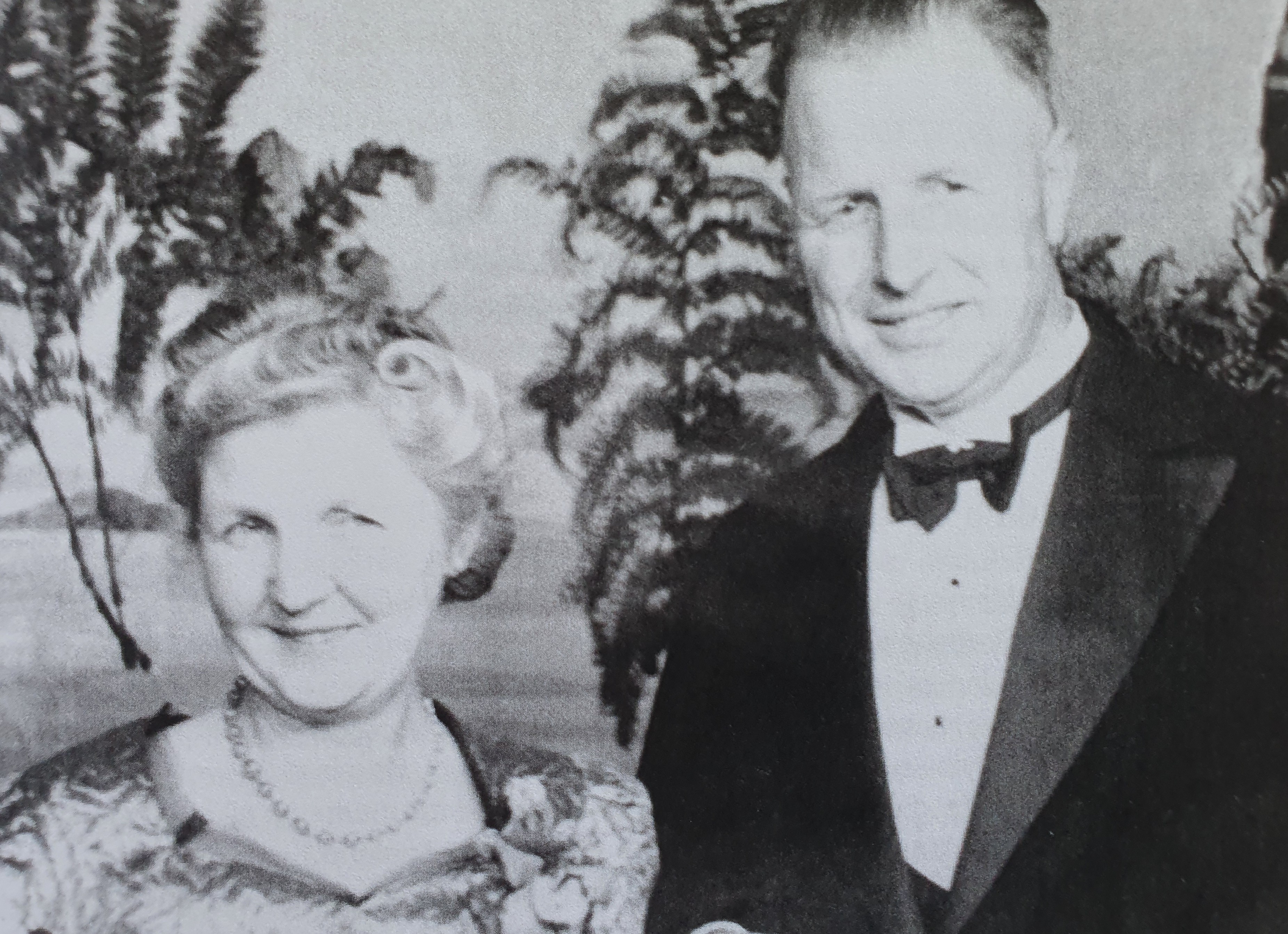
May was born in 1899, the youngest of six children. Her father, George Washington Tayler – named after the American president – was a successful businessman who owned the Central Hotel in Eltham. In 1901 he was elected the first Mayor of the town, a role in which he served multiple terms. By the time she was interviewed by the museum in 1983, May had outlived all five of her siblings as well as her beloved parents and described herself with a sad laugh as “the last of the Mohicans”.
May had been attending Eltham Technical School but transferred to Chetwode at the beginning of 1913 in part, she said, because she didn’t like her teacher, Mr Reuben Lightbourne:
Who was the last one I had there on that list? Lightbourne? Yes, Lightbourne, he was teaching me then though I didn’t like him very much so I went to private school afterwards, I came up to New Plymouth to Chetwode, a private boarding school there. C-H-E-T-W-O-D-E!
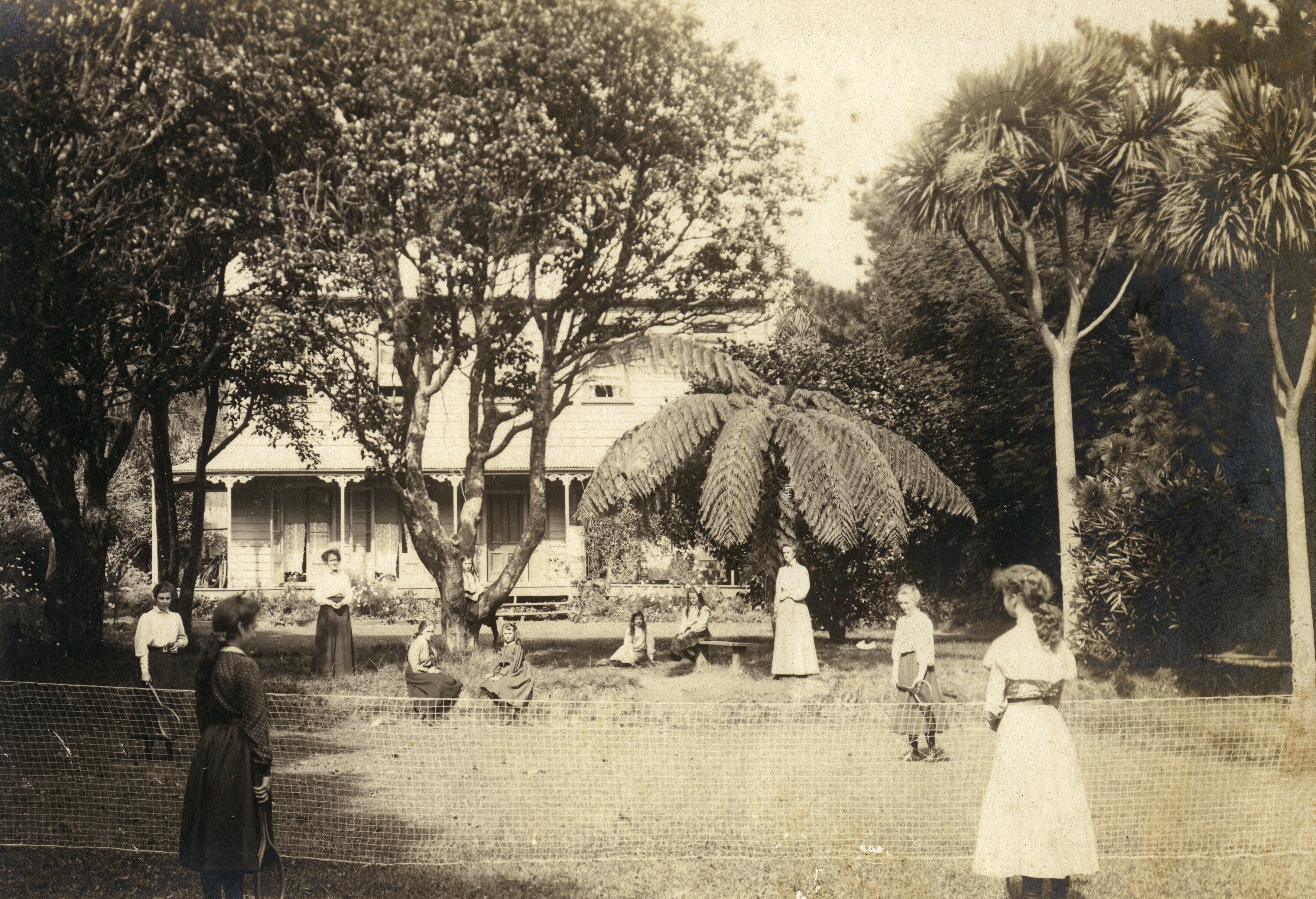
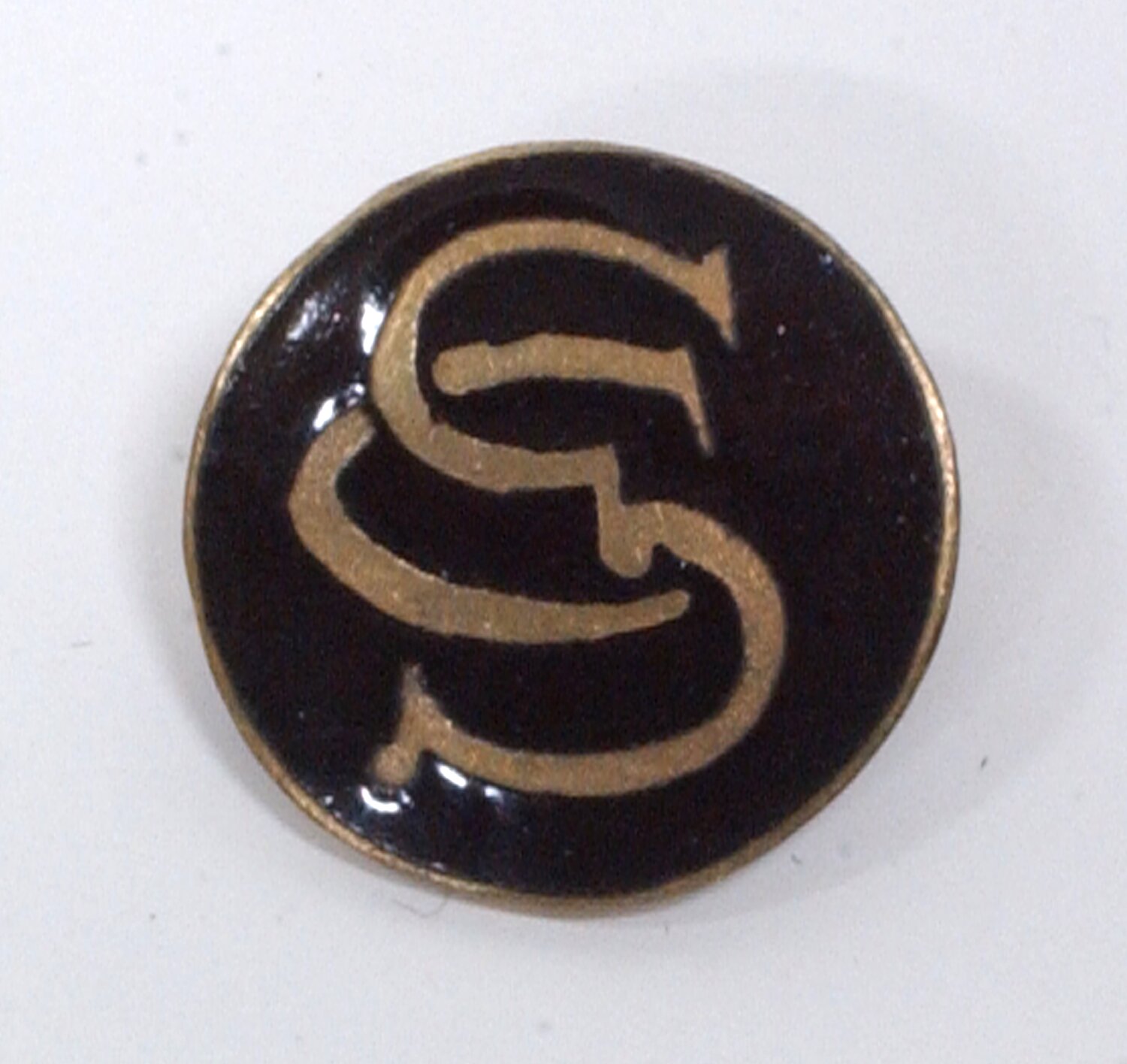
If the Taylers had been Catholic, she could have attended Our Lady of the Missions Convent School on Powderham Street. There was also the newly established New Plymouth Girls’ High School and several other private day schools in the region. But Chetwode was the only private Anglican girls' boarding school in New Plymouth, with a reputation for producing accomplished young ladies in pleasant surroundings. Located on the block bounded by Devon Street, Cutfield Road and Powderham Street, the school took both boarders and day pupils and had large well-kept grounds which it boasted were just a few minutes’ walk from the sea.
Edith Owen Stanford took over the school, previously known as Miss Margaret Roser’s School for the Higher Education of Girls, in 1898 and renamed it Chetwode after her father Robert’s family home in England. Edith was assisted by her sister Constance and a staff of three other teachers, including Florence Rutherford, Ernest Rutherford’s twin sister.
Taranaki’s isolation and relative poverty, along with the need to use children as free labour, meant that education had been neglected for many years after the settlement was established in 1841. By 1855, there were still only eight schools in the province with 272 pupils. Many children only attended Sunday School as families could not or would not pay the weekly six pence fee charged by often short-lived private establishments. The region’s population was nearly 3000 at the time, so the lack of educational options for children was rightly decried by locals. A Census return published in the New Plymouth Gazette for the year ending June 1856 revealed that of the 847 children aged 7 to 14 living in Taranaki, 47 couldn’t read at all, 148 could read but not write and only 326 were fully literate, with fewer than half of those being girls.
All this changed with the Education Act of 1877 which established free, secular, compulsory education for all children between the ages of seven and 13. By the time May enrolled at Chetwode there were one hundred schools in Taranaki with 6389 pupils. However, girls were only sent to secondary school if their parents particularly valued education and could afford to pay for the privilege – the Taylers were both, having already paid for eldest daughter Minnie to gain a degree in music via London’s Trinity College and first-born son George Washington Junior to attend Victoria University.
Chetwode was known for its teaching of music – every pupil learnt an instrument, mostly the piano but also the violin, viola or cello, as well as singing and musical theory and many sat the prestigious Royal Academy or Trinity College music exams each year. Also on the curriculum were English, French, Latin, mathematics, geography and Divinity as well as the more ladylike pursuits of cooking, drawing, dancing, dressmaking, gardening and needlework. The latter were a reminder of girls’ nurturing role, and the expectation that they would ultimately become home makers whatever other ambitions they might entertain.
Girls’ schools were much less academically inclined than those for boys, but Chetwode was interesting in its inclusion of mathematics on the curriculum, a subject that plenty of other institutions deemed to be of little practical value to young ladies. Greek was ruled out as entirely inappropriate but there seems to have been a certain cachet to studying Latin, which some thought might be able to train even the female mind in habits of logic, and speaking French was the ultimate social grace:
We had French and Latin and every jolly thing, they were mad on French: French books, French that we had to read, French everything as far as we could make out. Why, I don’t know… [and] everybody learned music!
English classes, with their Shakespeare plays and Victorian novels, were, along with singing, believed to encourage grammatically correct polite speech, with pronunciation as near as possible to that of Mother England, a desperate attempt to counteract the distressing ‘colonial twang’ that could be heard in the accents of New Zealanders born from the 1880s onward.
Edith Stanford also advertised the fact that “special attention is given to the physical development of the pupils”. Healthy exercise and games were encouraged as a way to balance the debilitating effects of study on young female minds, as evidenced by the provision of a “play area” and tennis court on school grounds, along with regular excursions to the saltwater baths at Kāwaroa Park. Hockey was regarded as a less feminine option than basketball (as netball was known until the 1920s) but, daringly, Chetwode had teams for both, with pupils also taught marching and calisthenics.
Chetwode’s fees ranged from £12 to £15 per term – $3000-4000 in today’s money – and its roll from 15 to 30 pupils at any one time. The school was advertised around the lower North Island, with some girls travelling great distances to attend. May recalled two fellow pupils, sisters who lived in Awakino, less than an hour and a half away by car today but anywhere from 6 to 11 hours’ journey from New Plymouth back then, depending on the weather:
And that was before that lovely road went through… they went home in a coach and four!... Imagine going over Mount Messenger [in that]!... [Then] they had to get into a boat or something to go across the river.
May spent two years at Chetwode and witnessed the outbreak of the First World War. Pupils volunteered at New Plymouth Hospital, knitted socks and other items for soldiers during their ‘domestic science’ classes and took part in the many fundraising campaigns run in New Plymouth, raising £15 for the Red Cross or donating their end-of-term prize money to the Belgian Fund. The curriculum also changed with the times, nursing and first aid being included as subjects from 1915 onwards, with certificates offered in conjunction with the St John Ambulance Association.
May wasn’t the most accomplished student but she did win a prize for neatness at the end of her first year at Chetwode and had fond memories of her time at the school.
May finished her studies and returned to Eltham in 1915. She lived with her parents and older sister Gladys at the Central Hotel and worked in the office of County Clerk William Tristram. The Tayler’s youngest son Roy enlisted as soon as the First World War was declared and served overseas for five years. Bert was invalided home, his health permanently damaged after being gassed on the Western Front. And George Tayler Junior was killed at Gallipoli – one of 75 men from Eltham who gave their lives for King and country. When asked by the interviewer what she remembered about the war years, May began with:
[The] boys all going away, our brothers. I was in Mr Tristram’s office in those days. I had to go in my brother’s position there because he always had Taylers in his office – funny, isn’t it. My sister Minnie... was with him when he was in the borough office, he was head of the borough then, and she was there and employed there and then my sister Gladys afterwards and then [Bert], they were all there. And then [Bert] went off to the war… and I took his job… Roy went with the main body, he was there right through the whole thing, [of] course [that] was a worry and George was killed at Gallipoli. Anyhow, [Bert] was invalided home, I think he was gassed or something, he came home a bit earlier. But you see they’re all gone.
The Armistice was swiftly followed by a deadly influenza epidemic, which caused widespread panic and killed more than 600 people in Taranaki, including 14 Eltham residents, in a matter of weeks:
I didn’t get it… strangely enough. We closed the office and had a whole lot of stuff there that people used to come in, disinfectant or something, we used to go down on duty and dole this out to them. And across the way at the garage we had one of those inhalation places and we used to go over there at about 4 o’clock in the afternoon and you know [mimicks deep breathing].
I don’t know what that inhalation was but it was in the garage down there by the old Argus [newspaper] office, where the Argus office used to be on the left, there’s a garage there and we used to go through there one after the other. The town hall was kitted up like a hospital and Dad was there – he was always going to Hāwera, always going down there and mixing up with people round there. Mother used to go and see them all, sometimes whole families went. I don’t know how I missed out, really and truly.
Chetwode closed in 1919 when Miss Stanford left to become headmistress at St Mary's School for Girls in Stratford, replacing a Miss Fleming who had died of influenza the year before. Edith took the remaining boarding pupils with her and the property was sold, providing temporary accommodation for returned soldiers once all the school equipment had been auctioned off. By 1922 Chetwode Private Hotel was operating on the site, charging ten shillings a night for its ocean views, tennis court and brand-new miniature golf course. The large residence was later converted into flats and eventually demolished in 1960.
Chetwode old girls held regular reunions for decades afterwards, with former pupils who couldn’t attend sending telegrams in their absence – a reunion held in Hāwera in 1949 included on its guest list Mrs Kathleen Barry who had travelled all the way from Canada. And in 1971, thirty former pupils, some in their seventies, gathered at Helen Cameron’s house on Nobs Line:
We used to always have an afternoon [tea] round in Nob’s Line, there’s a girl there that always has had it there for years and we all just congregate there – as near as we can get to Miss Stanford’s birthday, she used to be the Head of the school, [of] Chetwode. We were always terribly fond of her and so we always celebrate there and just the ones that can, turn up.
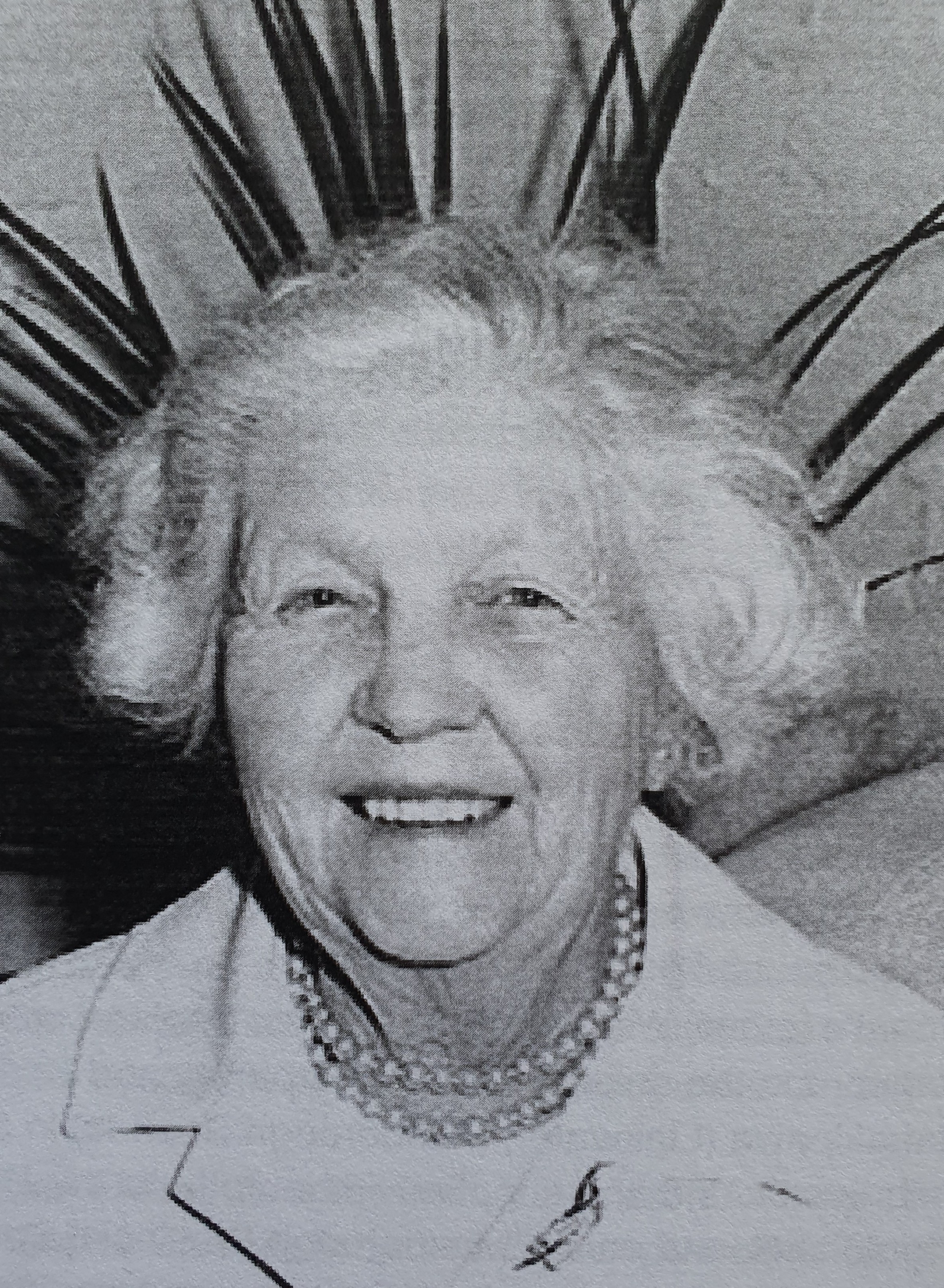
May was living in Fitzroy when she was interviewed, having moved to New Plymouth in the 1950s after her husband Leslie Whitham’s career as a postmaster took them to various towns and cities around the country. The couple wed in 1922 while May was training to be a nurse in Wellington – her studies were of course abandoned when she married – and lived everywhere from Levin to Leeston, raising three children along the way.
May Whitham died on 26 May 1989 at the age of 90. The Last of the Mohicans left us a selection of memories related in her own distinctive voice, from a life lived through an age of extraordinary change, not least in the sphere of female education.
Kiwi girls now stay at school longer and leave with higher qualifications than boys and two women graduate from New Zealand universities for every man. Some of them even learn Greek.
.
This story was originally presented as part of the In Her Own Words: More Taranaki Women’s Stories event during Taranaki Heritage Month on 16 October 2026.
Please do not reproduce these images without permission from Puke Ariki.
Contact us for more information or you can order images online here.
The information on this website is provided for general research and reference only. While we try to keep content accurate and current, we make no guarantees about its completeness or correctness. It should not be considered a replacement for a LIM or a Property Report. Some content is supplied by third parties. Puke Ariki has not verified this content and users should check its accuracy before relying on it.The inclusion of a building on the website does not imply heritage status. See SCHED1 in the NPDC District Plan for a list of buildings that have rules about what can happen to or around them (administered by NPDC). See the New Zealand Heritage List for a list of buildings that are celebrated for their heritage significance but are not subject to rules (administered by Heritage New Zealand Pouhere Taonga). Should any corrections need to be made to the records or for more information please contact us.


