


Women played many roles during the New Zealand Wars – they were wives and mothers, storekeepers and nurses, refugees and mourners. But some took a more active part in the conflict.
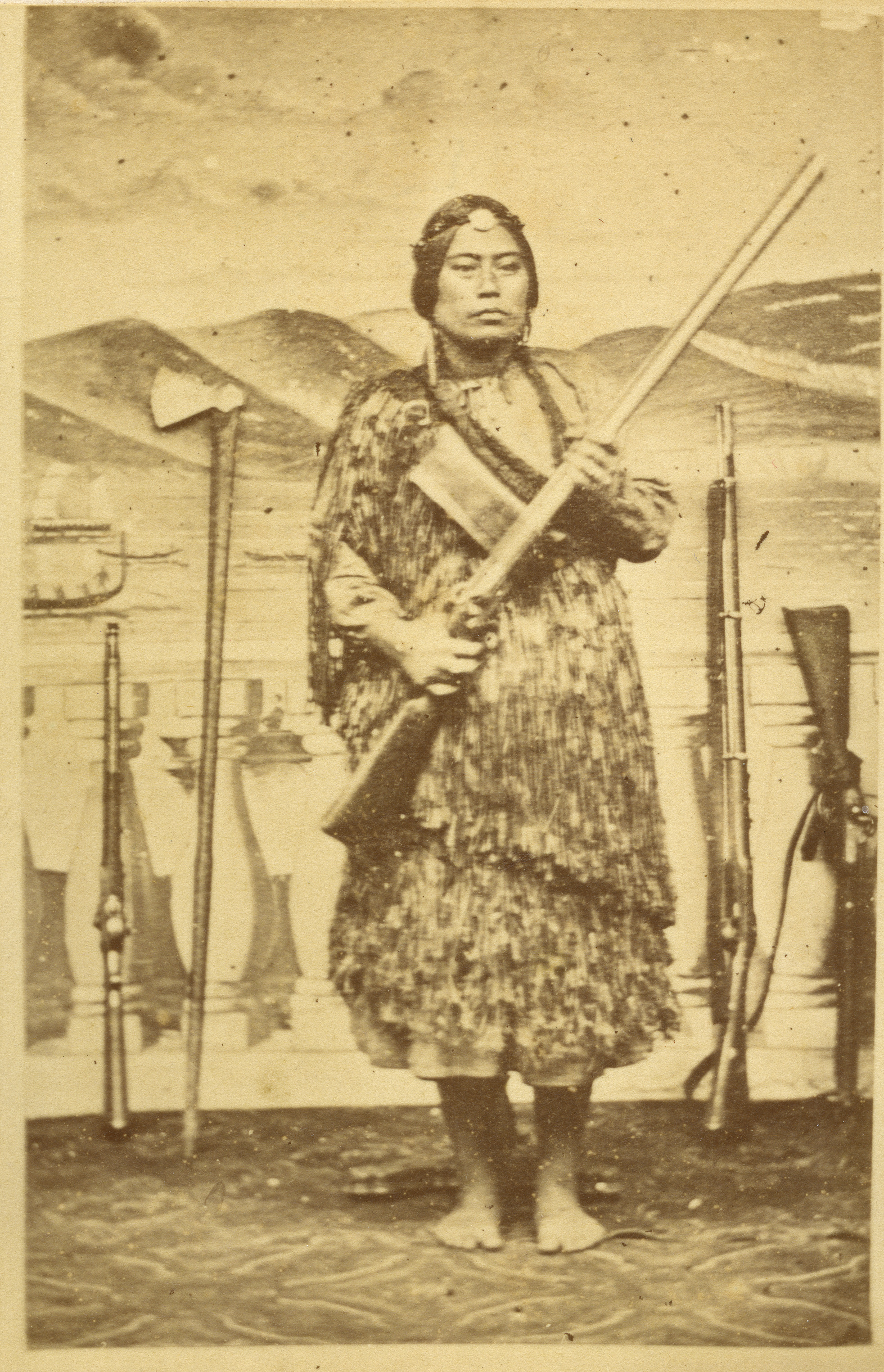
Wāhine toa served with men on both sides, their images designed to communicate mana, and Lucy Lord was one of them. Employed as an interpreter and guide to colonial troops during the Taranaki Wars in the 1860s, her involvement resulted in killings and land confiscations that negatively impacted her own relatives.
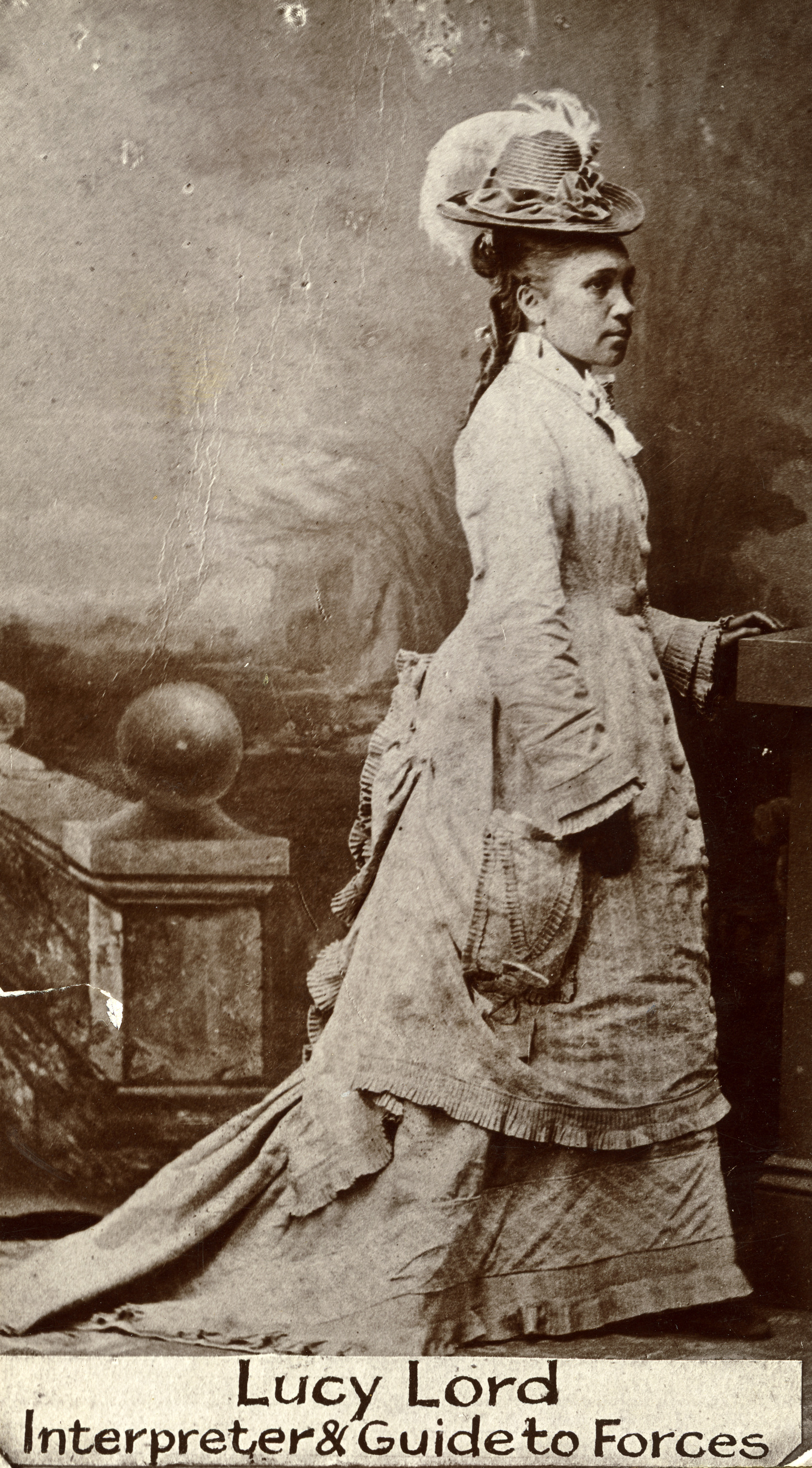
But Lucy knew the importance of presentation. The only confirmed portrait we have depicts her in a very different guise to those confronting female warriors. Here Lucy Lord is a respectable Victorian lady. Her hair has been styled, her movement restricted by heavy skirts and an elaborate hat, neckline high and sleeves long to indicate modesty and virtue. She is feminine, domestic, even passive with her averted gaze, content to be at home rather than in spaces which rightly belong to men.
Lucy was a woman who moved between worlds, adopting whatever costume was required to play her part. She also used different names: Lucy Lord, Lucy Grey, Louisa Grey, Lucy Blake, Louisa Dalton, Takiora, Takeroa and Wikitōria of the Nukumaru. So who was the real Lucy?
She was born Lucy Elizabeth Lord in Kororāreka, now known as Russell, and baptised on 9 October 1842, the daughter of a British trader named William Lord and a Māori woman named Kotiro Hinerangi. Kotiro was born in South Taranaki but had been taken to the Bay of Islands as a slave during a Ngāpuhi raid in the 1820s. Sophia “Te Paea” Hinerangi, famous tourist guide of the Pink and White Terraces, was Lucy’s half-sister.
Lucy could read and write in English and te reo thanks to missionary schooling, but it’s not clear whether she was educated in Kororāreka or later in South Taranaki when she was sent to live with her Ngā Ruahine relatives. Lucy’s mother never returned to her homeland but her youngest daughter married a man named Te Mahuki from Whanganui in the early 1860s and the couple began working as scouts and interpreters for Pākehā armed forces during the Second Taranaki War.
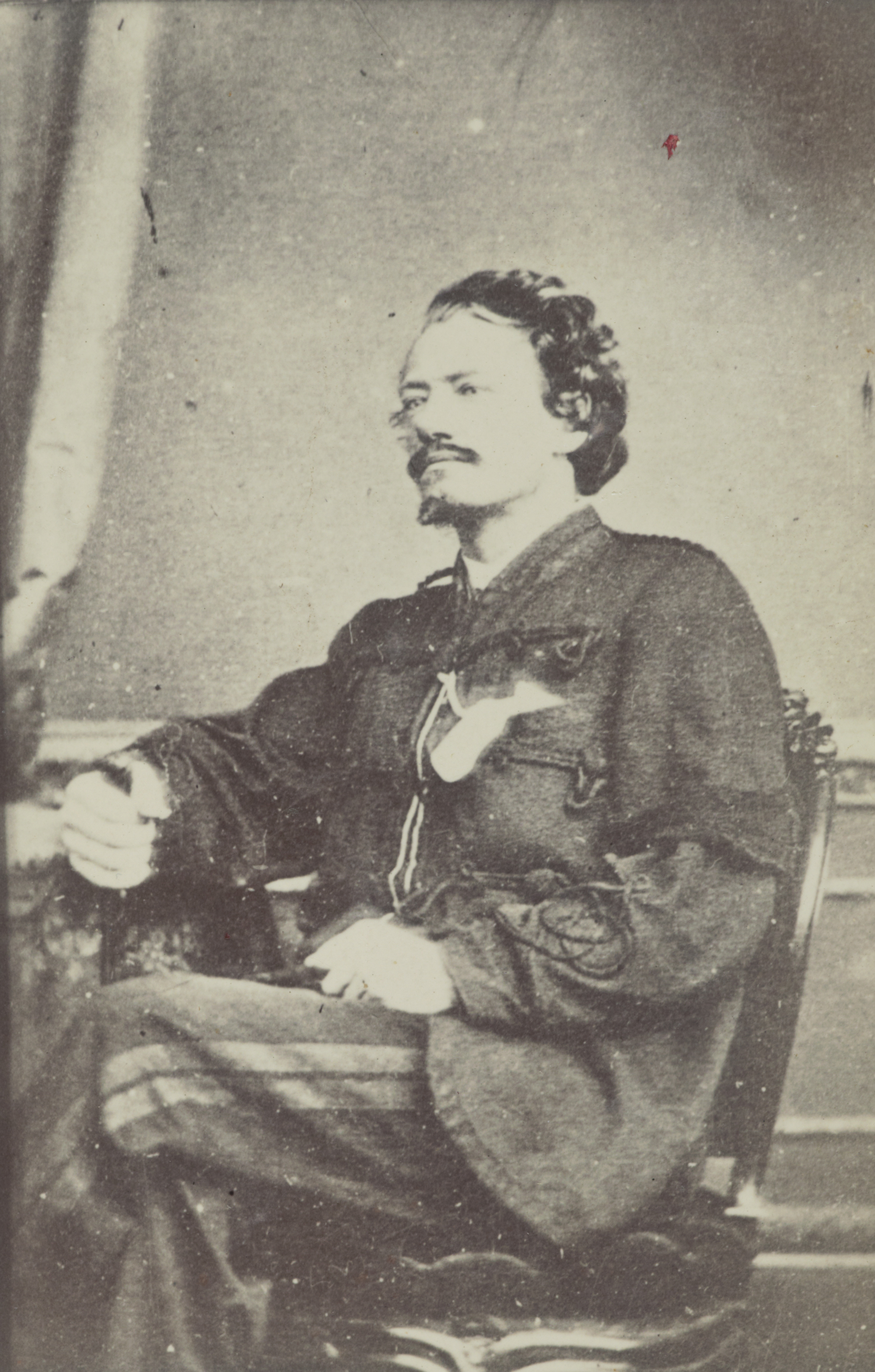
The most famous of their employers was the colourful Prussian mercenary Gustavus Ferdinand Von Tempsky during his fight against Ngāti Ruanui chief Riwha Tītokowaru, whose opposition to the loss of tribal land led him to active resistance against the Crown. Lucy was related to Tītokowaru which made her work as a government guide even more controversial – he referred to her as “the Pākehā’s General” and once said that if it weren’t for their whakapapa links her life might not have been spared. The popular Von Tempsky commanded a company of Forest Rangers and was a talented artist, singer and musician as well as a dashing soldier of fortune.
Calling herself Takiora, the name of her grandmother, Lucy used her knowledge of the local terrain and the movements of her mother’s people to draw maps and help plan attacks in tribal territories.
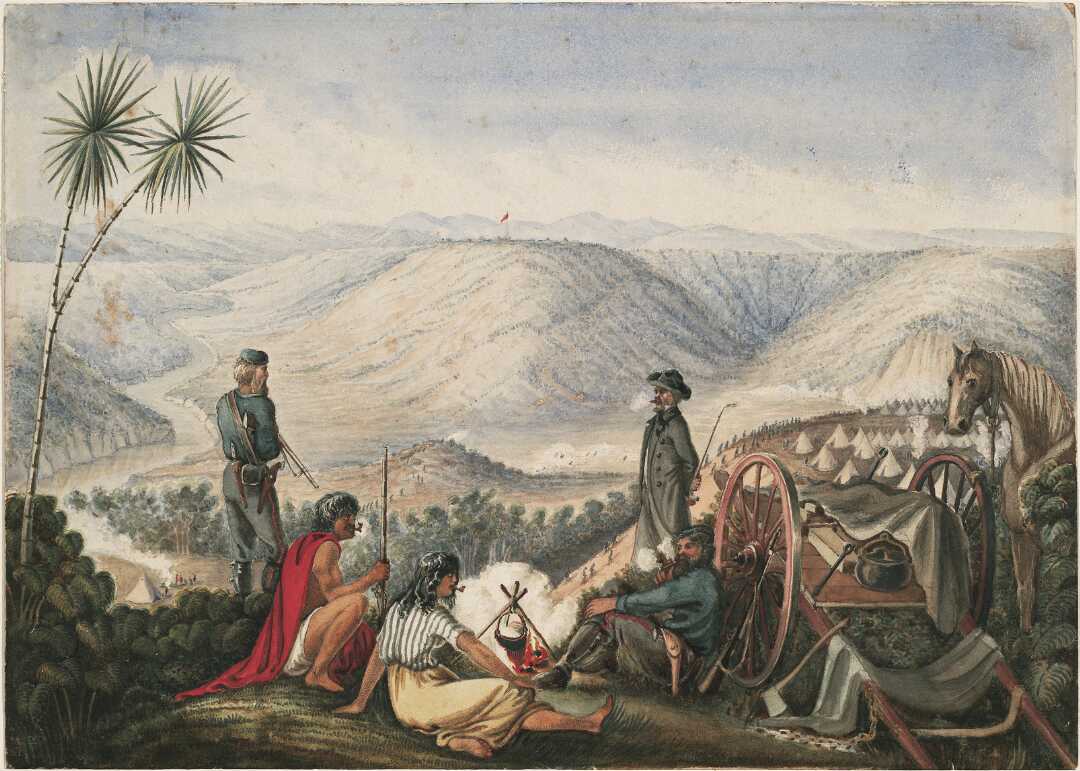
Lucy’s husband Te Mahuki was killed in action in 1866, just days after Von Tempsky painted the couple resting in an encampment during a march to New Plymouth. Lucy is sitting in the foreground smoking a pipe, with her husband beside her and Von Tempsky leaning against the wheel of a cart.
Because she was young and attractive, operating in an environment usually out of bounds for women, and because Von Tempsky was Von Tempsky, there were rumours that Lucy was his mistress. As James Belich noted in his 1989 book I Shall Not Die: Titokowaru’s War 1868-1869: “ ‘I believe he had a Māori wife [sic],' wrote Wanganui settler John Wright, 'This is something which may not be known.' She was probably Lucy Lord or Takiora, widow of von Tempsky's 'most trusted scout', Te Mahuki, and herself an excellent scout and spy. A strong and able woman, she was half Ngāti Ruanui, a female Katene – though her doubts about her own role emerged much later."
Von Tempsky certainly painted Lucy a lot – with her husband during an ambush near Whanganui, relaxing while smoking a pipe, even grieving beside the body of Te Mahuki after he was killed during a British attack on Otapawa Pā east of Hāwera.
His watercolour On General Chute’s March, West Coast shows 500 imperial, colonial and pro-government Māori forces journeying east of the mountain. The drab trail of soldiers is enlivened by the striking figure of Lucy riding a white horse. And right behind her, carrying his signature sword, is the artist himself.
Following the death of her husband, Lucy continued to work for Von Tempsky and Lieutenant-Colonel Thomas McDonnell, commander of the government forces. She spent the next two years guiding them and their troops on long, arduous marches through difficult country, in all weather, and was respected for her ability to navigate the dense Taranaki bush. The men depended on her expertise, but Von Tempsky would often try to ensure Lucy’s safety during skirmishes by leaving her in their camp if he thought the intelligence she had provided was enough to go on.
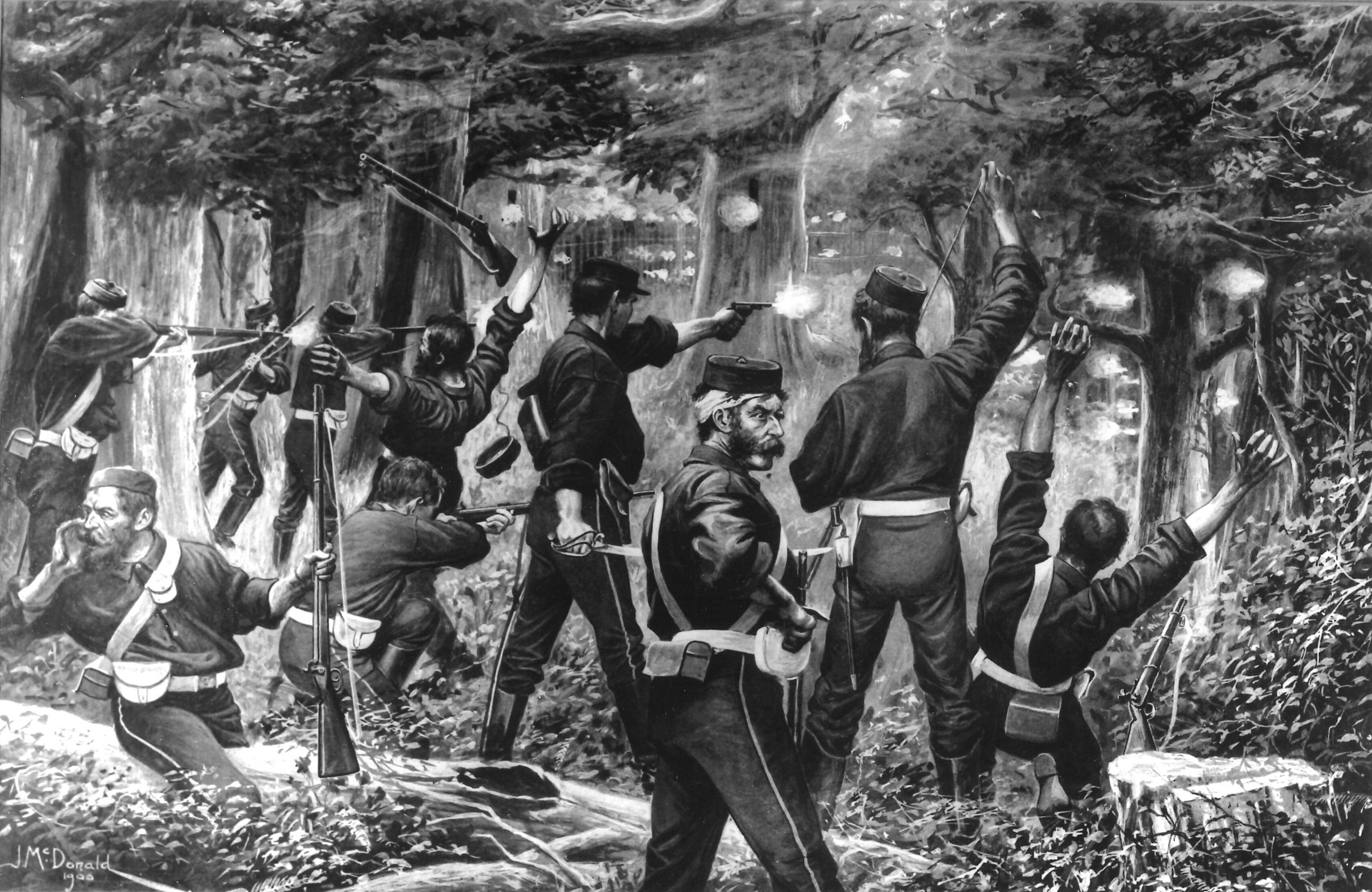
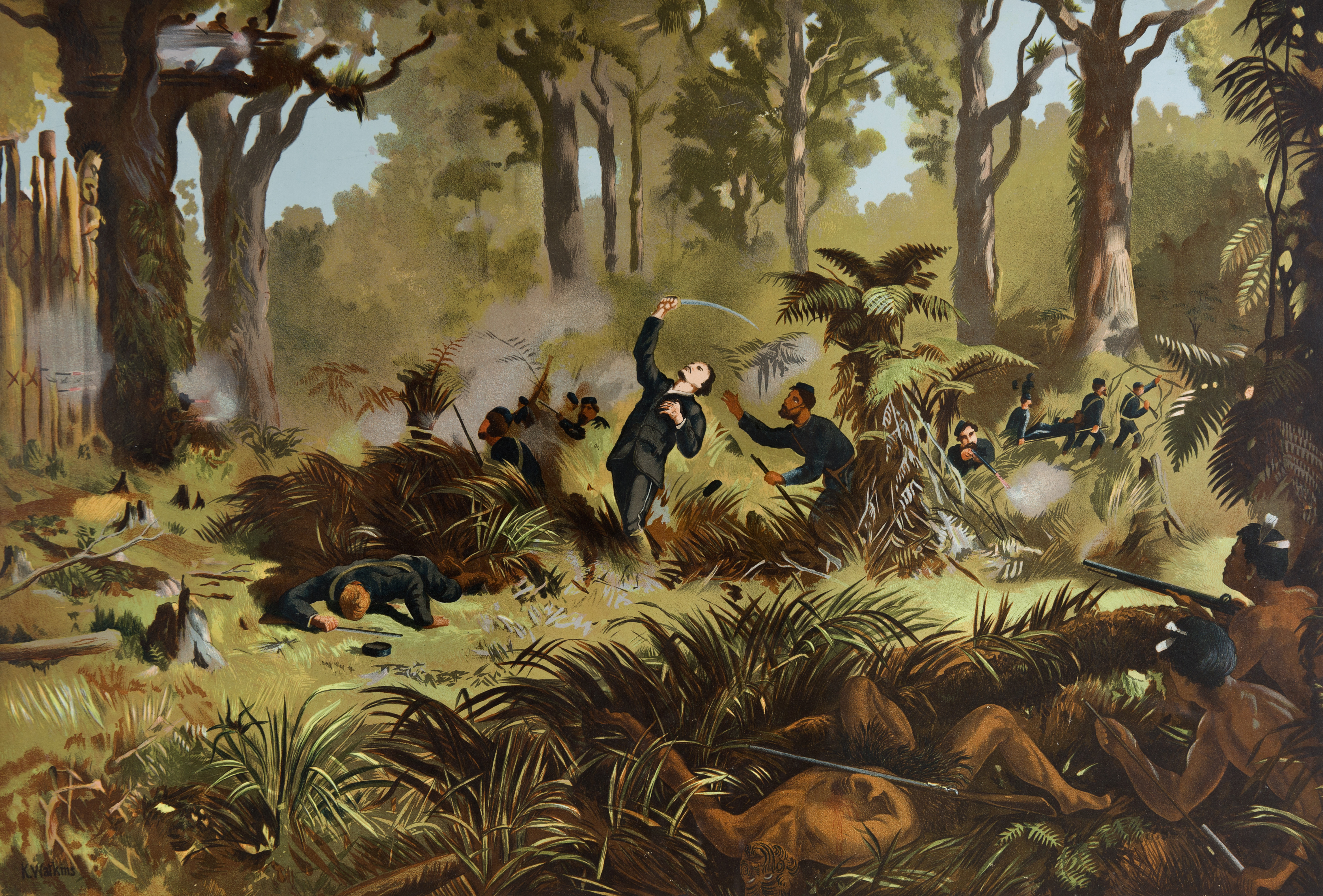
Von Tempsky was killed by a musket ball to the head during an attack on Te Ngutu-o-te-manu, a fortified village south of Kaponga, on 7 September 1868. This was the headquarters of Tītokowaru and his Pai Mārire resistance fighters, known colloquially as the Hauhau. Colonial forces partially destroyed the pā on 21 August but a second assault by hundreds of Militia, Forest Rangers and their Māori supporters on 7 September ended in a decisive victory for Tītokowaru.
Lucy later wrote a statement describing the events that led to Von Tempsky’s death. In this six-page document, set down in beautiful, flowing script, Lucy presents herself as a trusted confidante of the swashbuckling adventurer she called “Von”:
Von Tempsky [and] McDonnell… sent for me, we had a korero what to do, I drew a plan for them of Te Ngutu and how to take it… [They] asked could they take the right I said no take the left. Just as I put it on the plan and they would not go wrong because the pa that side was open. The next day I was sent for and we sat up till 12… the bugle sounded and the men fell in... Von came and said goodbye… I could not sleep that night and… sat up till daylight, we saw smoke through the bush towards Te Ngutu the way they went.
They took the pa from the left. Von Tempsky and others killed two chiefs and… set fire to the pa and looted everything and got a pet kaka… They came back with great glee… gave me the kaka and I kept it as a pet.
On… Sunday afternoon… McDonnell came to my whare & wanted me to go out… but Von… [was] coming in [and] we had to talk the matter over. I told him to take the same track to Te Ngutu. There was an altercation as Von did not wish me to go as my information was quite sufficient. [So] McDonnell got Horopapere… from Waitara for [their] guide. They had the Wanganui Natives with them… when the troops got halfway in the bush Horopapera got on a tree and heard the hauhaus’ haka…
Von Tempsky was killed & the others, they were shot from a hollow… tree… & their bodies were never got… the men cleared out… all killed or wounded… This was McDonnells mistake… I heard from the native[s] since that if Von had had more men on his side he would have given them pepper as Motu who shot Von & the others was wounded. If they had taken the track I showed them they would have driven the Hauhaus’ out, but they had some very bad men not fit for the bush…
Von Tempsky’s death turned him into a folk hero, his body burnt on a funeral pyre by the victorious Hauhau. Lucy must have missed his company, whatever their relationship may have been.
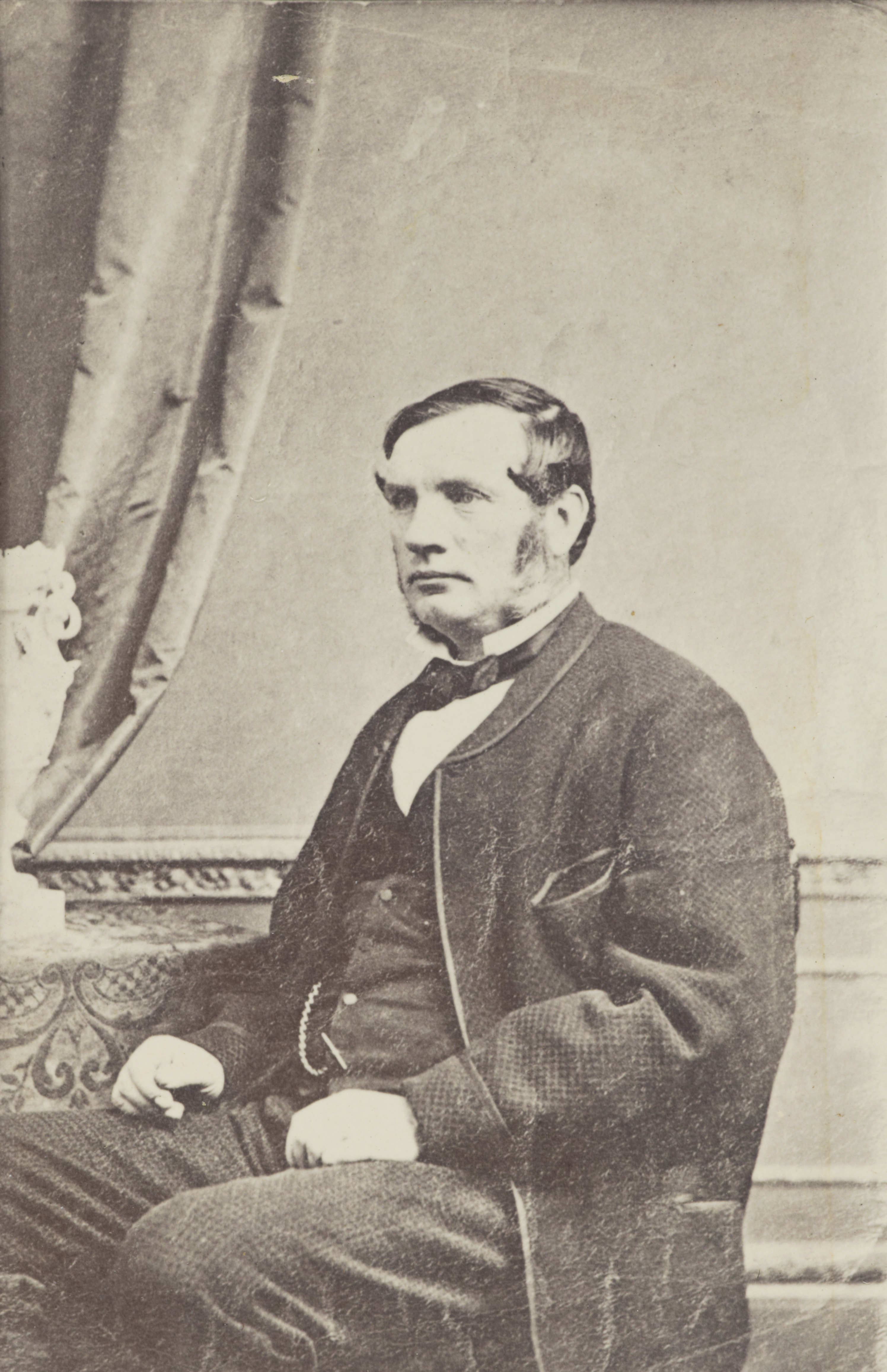
Lucy continued her intelligence-gathering activities into the 1870s, after an uneasy peace was declared. She corresponded regularly with Donald McLean, Minister of both Native Affairs and Defence, who was keen to know what Māori were up to in the volatile province. She believed she was risking her life to write such letters and used them to emphasise her loyalty, reminding McLean of promises made that her services to the government would be recognised.
Lucy was indeed well compensated. Appointed a Native Interpreter in Pātea and later employed within the Native Land Purchase Department, she helped the government buy up Māori land, including in her own tribal area. For this she was paid £10 pounds a month, the equivalent of several thousand dollars today, and given £400 worth of confiscated property. She ended up owning some 13,000 acres which, along with the money she was paid for her scouting work and reports over the years, made her a wealthy, independent woman.
Lucy’s great niece, the actress Nicola Kāwana, wrote a play about her famous forebear in 2021, called Kūpapa, which can mean an ally, a collaborator or a traitor. She acknowledged the fact that Lucy remains such a contentious figure many of her iwi still refuse to speak her name.
Lucy, using the name Louisa Grey, married Pākehā surveyor Joseph Dalton in 1878, and they farmed on her Hastings Road property near Normanby. She seems to have wanted to distance herself from her previous life, writing to the Hawera & Normanby Star asking not to be called Takiora in print anymore. In the play, Lucy explains that she worked with the colonisers to help secure a future for both peoples and there is evidence she sometimes passed intelligence from McLean back to Tītokowaru so her “collaboration” may have gone two ways but the relationship with her whānau remained fraught.
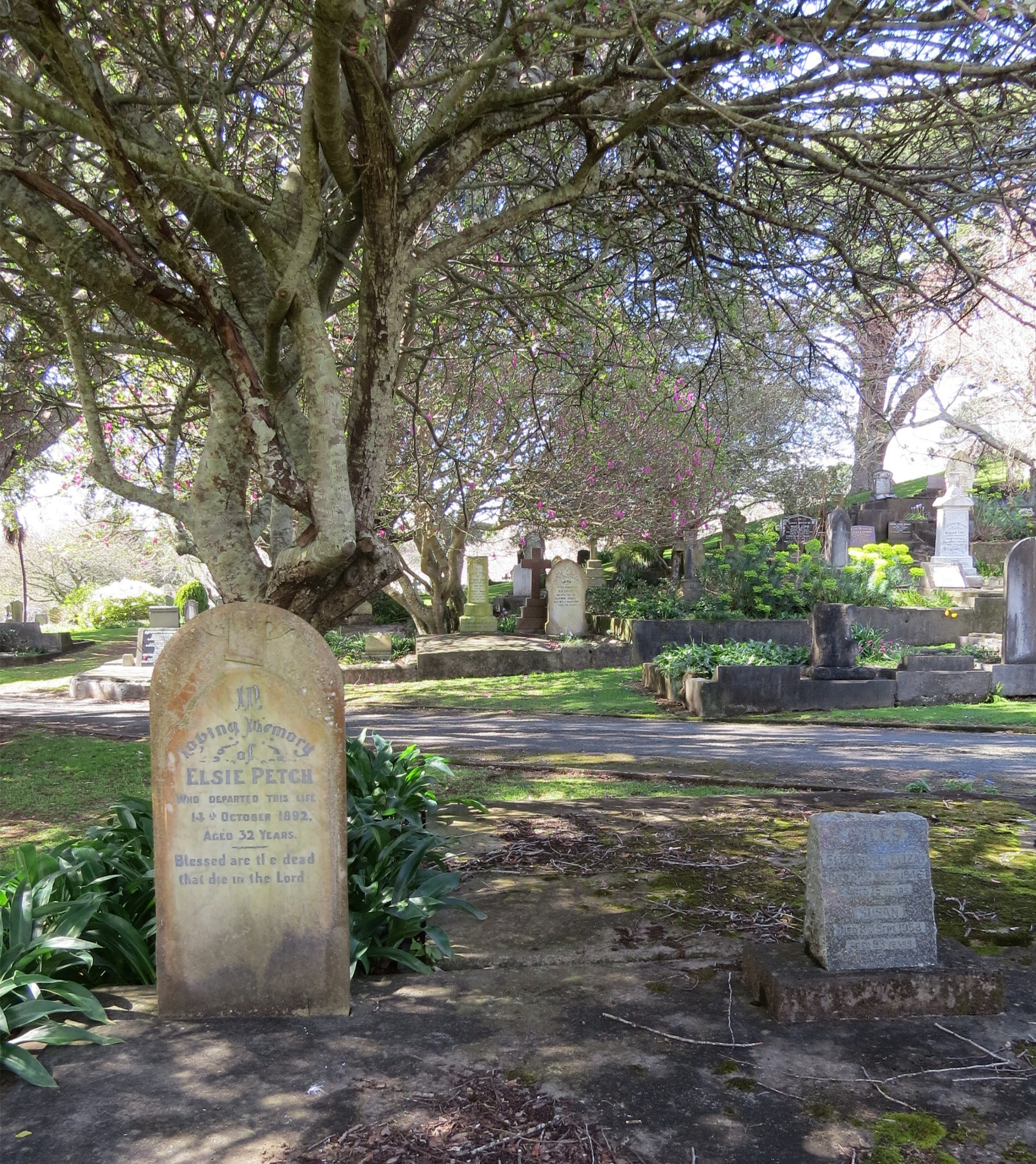
Lucy Dalton became a heavy drinker, with a Normanby hotel publican taking out a prohibition order early in 1893 to stop her supply of liquor. She died at the age of 50 in New Plymouth Hospital on 3 September that year. Newspaper reports of her death referred dismissively to this bold, intelligent woman as “a half caste… who had an eventful career” and she is buried not in an urupā but in an unmarked grave at Te Hēnui Cemetery.
.
This story was originally presented as part of the In Her Own Words: More Taranaki Women’s Stories event during Taranaki Heritage Month on 16 October 2026.
Te Ngutu o te Manu Memorial (1890) - Te Rangi Aoao Nunui
LinkPlease do not reproduce these images without permission from Puke Ariki.
Contact us for more information or you can order images online here.
The information on this website is provided for general research and reference only. While we try to keep content accurate and current, we make no guarantees about its completeness or correctness. It should not be considered a replacement for a LIM or a Property Report. Some content is supplied by third parties. Puke Ariki has not verified this content and users should check its accuracy before relying on it.The inclusion of a building on the website does not imply heritage status. See SCHED1 in the NPDC District Plan for a list of buildings that have rules about what can happen to or around them (administered by NPDC). See the New Zealand Heritage List for a list of buildings that are celebrated for their heritage significance but are not subject to rules (administered by Heritage New Zealand Pouhere Taonga). Should any corrections need to be made to the records or for more information please contact us.


