


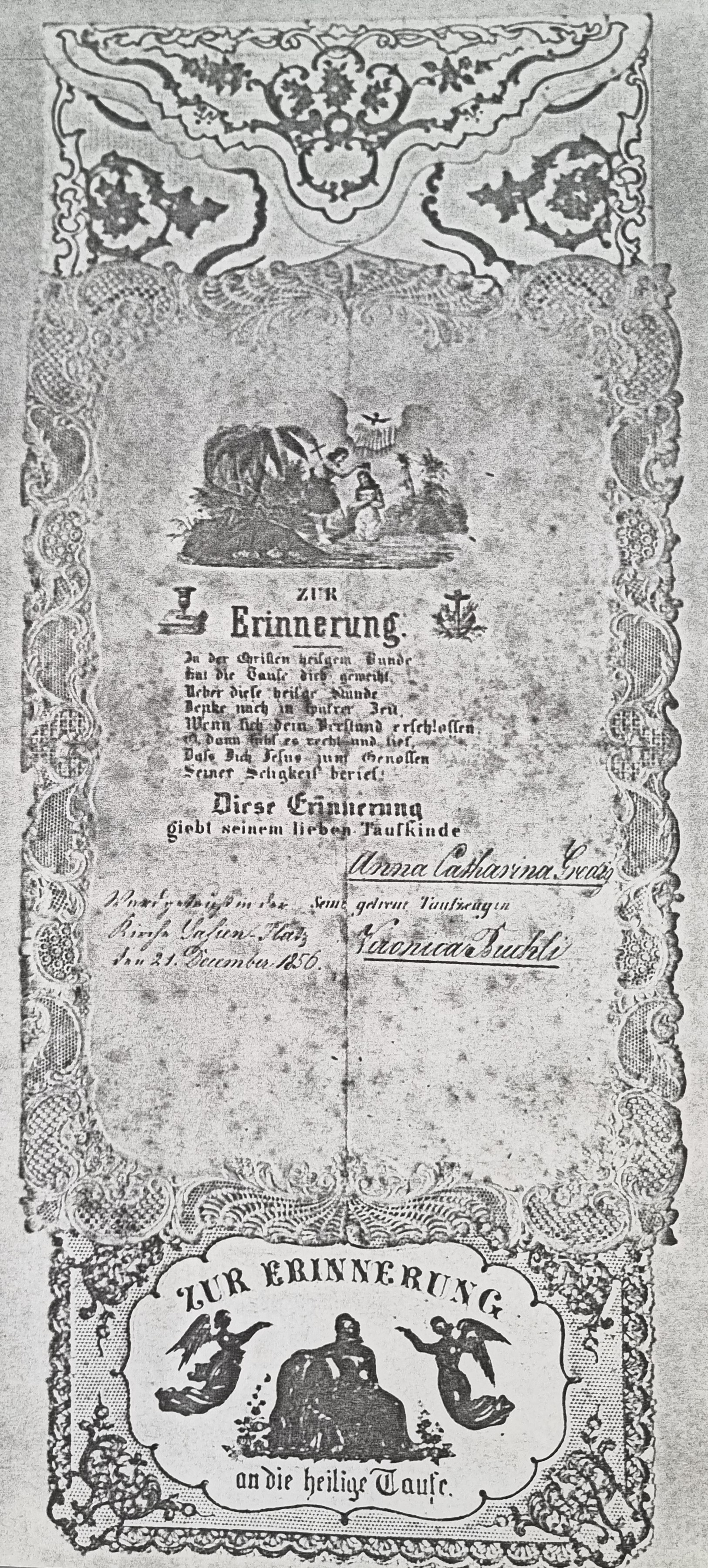
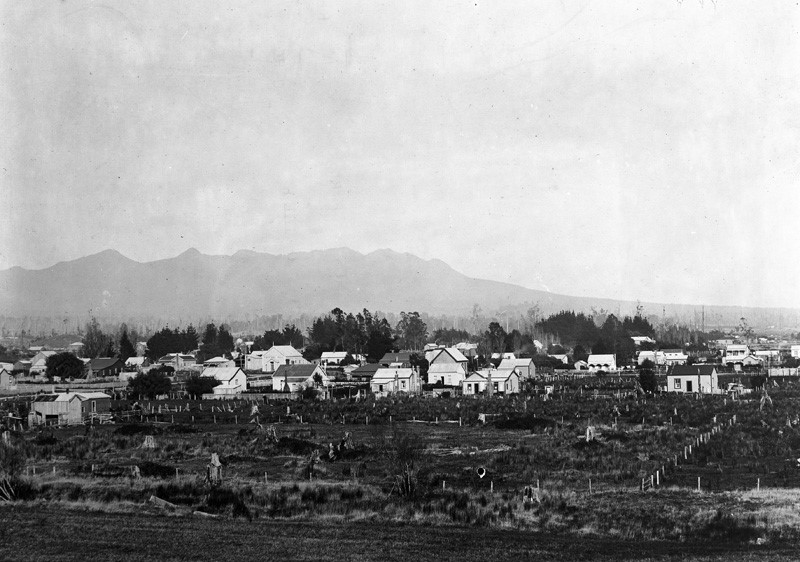
Anna Catherina Gredig was born in the alpine Swiss village of Safien five days before Christmas in 1856, the daughter of Felix and Anna Gredig. Her father died when Anna was only 4 years old, leaving her mother with four young children to raise alone.
Spurred by their situation and hope for a better future, Anna’s mother made the courageous decision to emigrate, along with her four children, to the far flung out post of New Zealand, 15 years after the death of her husband.
The family travelled with a group of 19 other Swiss immigrants brought over by Felix Hunger on the ship, the Halcione in 1875. Felix Hunger had himself left Safien as a nineteen-year-old and lived first in Australia and then New Zealand. He returned to his hometown to encourage others to make the move to Taranaki. He repeated this initiative in the 1880s, bringing two more groups of Swiss settlers here.
Anna arrived in New Zealand as a 21-year-old, along with her mother, her two sisters and older brother.
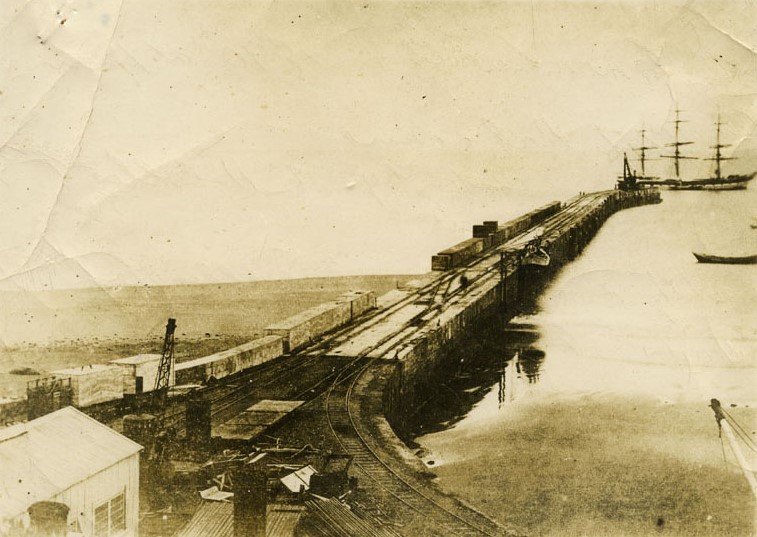
On their immigration documents the three young Gredig sisters listed themselves as servants and once they arrived in New Plymouth they all found work as maids to English families. Just a few months after the group arrived in New Plymouth Felix married Anna’s sister Margreth and they settled in Normanby, along with Anna’s mother.
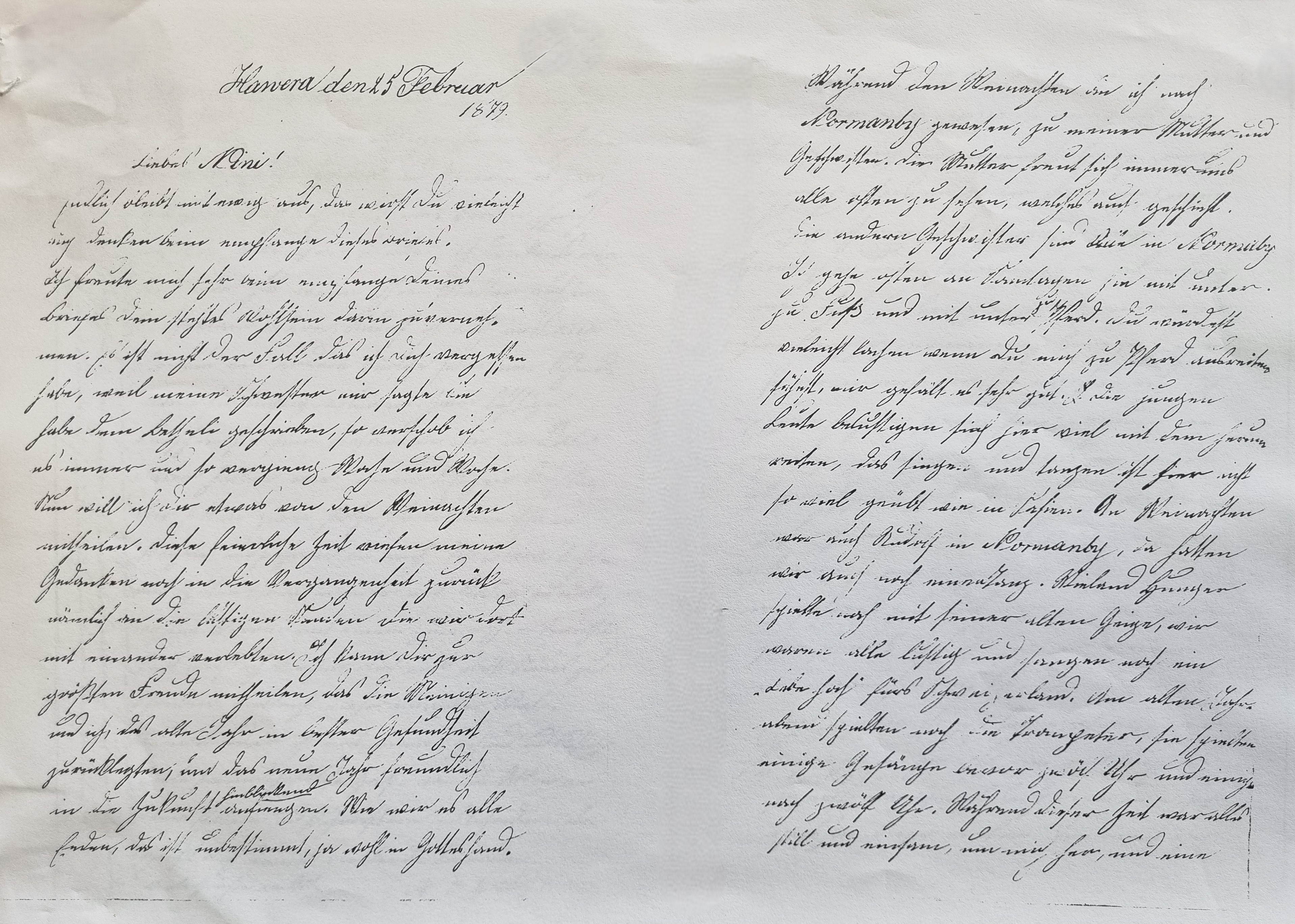
We can gain some insight to Anna’s life and her feelings toward her new home in the first of two letters written by Anna held in Puke Ariki’s archives.
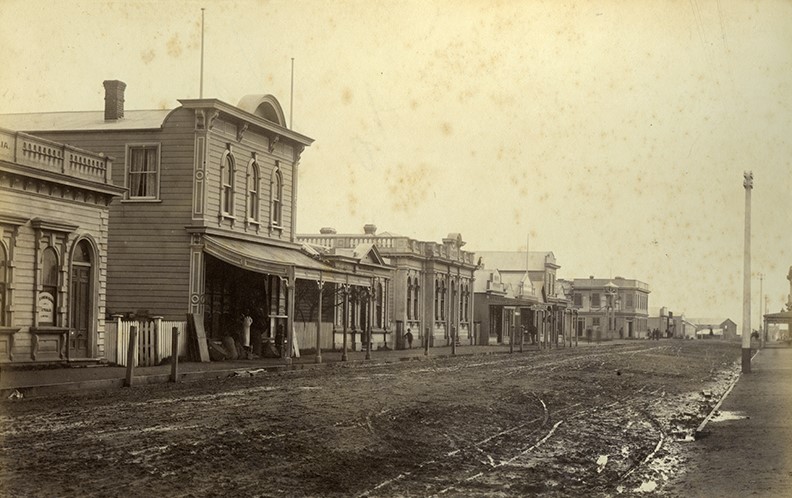
The first letter was written in 1879 when Anna was a single 23-year-old, to a friend back in Switzerland. She was living in Hawera at the time and working as a domestic help. She starts by apologising for not writing earlier:
“It is not that I forgot you. But my sister told me that she has written …and so I shifted, and the weeks were going over and over.”
She reminisces about home:
“My thoughts are often going back in the past. I am remembering the happy hours we had together. During Christmas I have been in Normanby at my mother and sister’s place. My mother is always happy to see us, she wants to see us often.”
She says she regularly travels to Normanby;
“Sometimes by foot, sometimes by horse”. Horse riding was obviously a new skill she had acquired; “you would laugh if you could see me on a horse. But I like it very much.”
She then reveals some of her homesickness which she felt more keenly during recent Christmas and New Year’s Eve celebrations:
“We were all happy and sang a praise to Switzerland. On the old year evening, the trumpets were playing some songs for midnight, and some after. During this time all was silent and lonely around me. A deep homesick bell rang in my heart and I was remembering the bells in my old home, when they rang the good-by of the old year and the welcome of the new year. But that is past and would never come again.”
She then talks about her job working in the home of a family with six girls:
“There is a lot to wash and to iron. But work and bread is colouring red the cheeks.”
She updates her friend on her sister’s growing family and others in the close-knit Taranaki Swiss community and requests a photo and long reply.
Five years after this letter was written, in 1884, Anna married John Parli, who had also immigrated on the Halcione and the couple went on to have five children.
In her second letter, written in 1908 when she was 52 and living in Inglewood, where John worked as a blacksmith and farmer, she is reflective but positive about the move to New Zealand made more than 30-years-ago.
“You are asking if we would meet you again. My thoughts are often going back to the old home. A trip home would be nice. We are now here … 32 years, I am thinking that this now is our home. We also are having some troubles but, nevertheless, it was better to come to New Zealand. We have a beautiful home and no debts. That we would never have had in Safien.”
After updating her friend about her children and siblings and recent trips to Auckland and Rotorua, she signs off:
“I will stop now I am not sure if you could read it. I think you remember I never was a good writer. I would like to see you again. Best wishes to you and to everybody who can remember, I will never forget you.”
John died in 19822 and Anna died in Inglewood in 1929, a proud Swiss woman who had made the difficult transition to a new country but was now happy to call New Zealand home.
Please do not reproduce these images without permission from Puke Ariki.
Contact us for more information or you can order images online here.


